
Why are your plant’s new leaves small or deformed?
New leaves record the conditions they grew in. New growth that is pale, spindly or slow points to too little light. Slow growth with fast-drying mix points to a crowded pot. Crinkled, twisted or scarred leaves point to pests feeding at the growing tip, or to uneven watering while the leaf formed. Fertilizer helps when a plant in good light has gone months without food.
Updated
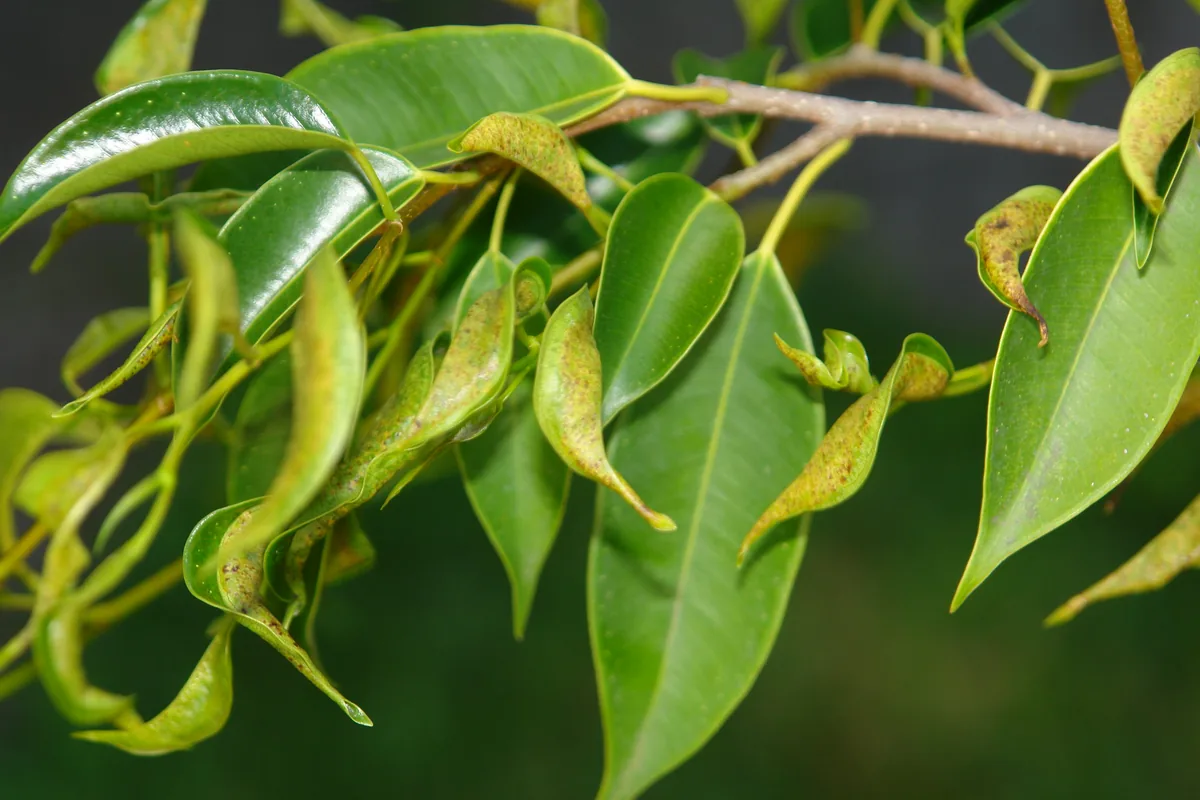
What do the new leaves have in common?
Their shape is the first clue. Distorted leaves point to something that hit the leaf while it was forming. Slow, pale or spindly growth points to growing conditions such as light. Sort the new leaves this way before you change anything, and change one thing at a time.
| What you notice | What to check | A useful next step |
|---|---|---|
| Pale, spindly or slow new growth, with longer gaps between leaves | Distance from the window, curtains, the season. | Give more light, gradually. See how much light your plant needs. |
| Slower growth, with mix that dries out fast | Slide the plant out. Are roots circling the pot or growing out of the drainage holes? | If roots fill the pot, repot one size up during active growth. |
| Crinkled, twisted, scarred or stunted new leaves, maybe with tiny black specks or insects at the tip | The growing tip and unopened leaves, with a magnifier. Shake the tip over white paper. | Keep the plant apart and identify the pest before you treat. |
| Crinkled or creased leaves with no pests | How evenly you watered while the leaf formed. Heaters, drafts, cold windows. | Water evenly and keep the plant out of drafts. |
| New leaves smaller and paler while older leaves yellow first, and no feeding in months | Feeding history, the last repotting, firm roots. | Feed during active growth, following the product label. |
| Distorted new growth soon after you sprayed the plant | What was sprayed, and when. | Stop spraying and judge by the next leaves. |
| Mottled light and dark green leaves with distorted or stunted growth | Whether nearby plants show the same pattern. | Keep it apart and ask an extension service to check it. |
Crinkled or creased leaves usually come from “stop/start development,” the Royal Horticultural Society (RHS) says. Big swings between day and night temperatures can cause it, but the RHS says irregular watering while new leaves form is the more usual cause. Clemson Cooperative Extension lists distorted leaves and buds among the signs of spray injury.
For the mottled pattern, get a diagnosis before you decide anything. The University of Maryland Extension says there is no cure for a plant with a virus and recommends throwing infected plants away.
To sort out which of these fits, Plant Doctor, an AI plant diagnosis app for iPhone, gives you 7 free check-ups. Each check-up takes three photos and comes back with the most likely cause and a step-by-step care plan.
Is it just the season?
Sometimes. The University of Minnesota Extension says many houseplants stretch toward limited winter light, so a slightly lanky look is common by the end of winter. Iowa State University Extension and Outreach notes that many houseplants rest during the short days of winter and need less fertilizer then. Don’t judge the plant by its winter leaves alone.
Could pests be feeding on the growing tip?
Yes, and they are easy to miss. Most pest thrips feed while hidden, often in buds and shoot tips, says the University of California Statewide Integrated Pest Management Program (UC IPM). Their feeding causes distorted, curled or dead shoot tips and leaves. Clemson says aphids feed on new growth and can cause misshapen leaves, stunted growth and deformed buds. Maryland Extension also lists cyclamen mites, which affect new growth first.
UC IPM notes that plants stay damaged until the injured tissue drops or is pruned off and new growth appears. Treatment depends on the pest. Read about thrips on new growth or aphids on the growing tip.
Has the plant outgrown its pot?
Possibly, if growth has slowed and the mix dries out fast. Minnesota Extension’s signs are roots circling tightly inside the pot, roots growing through the drainage holes and soil that dries out unusually fast. Iowa State says most houseplants prefer slightly cramped roots, so small leaves alone aren’t a reason to repot. The guide on whether to repot walks through the decision.
When is fertilizer actually the answer?
Fertilizer helps when the plant can use it, which means:
- The plant is actively growing. Iowa State says to fertilize only then.
- It has good light. Iowa State warns that more fertilizer than the light can support gives spindly or weak growth.
- It hasn’t been repotted lately. Most potting mixes contain a little fertilizer, so Iowa State says little or none is needed for the first few months after repotting.
- Older leaves pale first. The RHS says a nitrogen shortage starts on the older leaves, and container mix can run short after a few months.
- The roots are firm and the plant has no pests. The RHS notes that any root stress, from too much or too little water, can bring on nutrient deficiencies.
More isn’t better. Minnesota Extension says too much fertilizer too soon can lead to weak, stretchy growth or salt buildup in the soil, and that plants in low light need less feeding. Follow the product label. If the stems are stretching too, read about long, stretched stems.
New leaf questions
Why are my plant’s new leaves so small?
Small new leaves can point to low light, crowded roots or winter. Iowa State says pale, spindly or slow growth can mean light levels are too low. Check the light, then the roots, before you feed.
Why are new leaves coming in deformed?
Common causes include pests feeding in the bud, uneven watering or temperature swings while the leaf formed, spray damage or a virus. Look at the tip with a magnifier first, since UC IPM says thrips often feed hidden in buds and shoot tips.
Why are my new pothos leaves so small?
Pothos leaves are fairly small indoors to begin with. Clemson says that as a houseplant, pothos leaves are typically a few inches long and stay whole. If each new leaf is smaller than the last, check the light and the roots.
The ASPCA lists pothos as toxic to dogs and cats, with mouth irritation, drooling and vomiting among the signs. These notes are educational, not veterinary advice. If a pet has chewed the plant, call your vet or an animal poison control line. Both hotline numbers are on our page about which plants the ASPCA lists as toxic.
Sources and further reading
Care guidance checked against the sources below. Plant Doctor’s app examples are separate from these references; the institutions do not endorse the app.
- Royal Horticultural Society — Leaf damage on houseplants
- Royal Horticultural Society — Nutrient deficiencies
- UC Statewide IPM Program — Pest Notes: Thrips
- Iowa State University Extension and Outreach — How to care for houseplants
- University of Minnesota Extension — Spring houseplant care
- University of Maryland Extension — Diagnose indoor plant problems
- University of Maryland Extension — Viruses of indoor plants
- Clemson Cooperative Extension — Common houseplant insects and related pests
- Clemson Cooperative Extension — How to grow pothos indoors
- ASPCA Animal Poison Control — Golden pothos
This guide offers general plant-care information. A photo cannot confirm every cause; a local nursery or extension service can help with severe or unclear cases.