
Why are your plant’s leaves turning yellow?
Yellow leaves can follow watering problems, a change in light, pests or normal aging. The color alone does not identify the cause. Start with the soil moisture and which leaves changed, then look for other signs before watering or feeding.
Updated
The other clues matter more than the color.
| What you notice | What to check | A useful next step |
|---|---|---|
| Wet soil and yellow lower leaves | Poor drainage, recent watering and whether the stem base feels soft. | Pause watering and check that the inner pot can drain. If it is also wilting, inspect for root trouble. |
| Dry soil and crispy edges | Moisture below the surface and whether the pot feels unusually light. | If the root ball is dry, water it thoroughly and let excess water drain. |
| Yellow speckles, webbing or sticky residue | Leaf undersides and new growth for visible pests. | Keep it apart from other plants while you identify what is present. |
| One older leaf, with healthy new growth | Whether the change is limited to the oldest growth. | Record it and observe. One old leaf does not by itself call for treatment. |
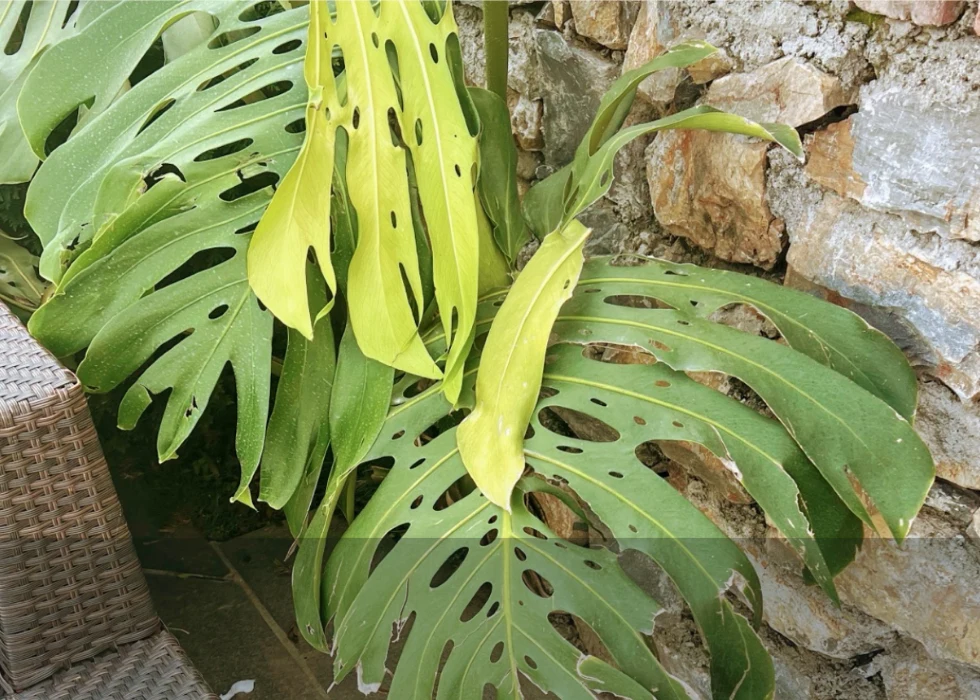
Change one thing at a time.
Write down when the leaf changed and when you last watered. Check both the drainage hole and any decorative outer pot. A dry surface can hide a wet root ball, so a quick glance is not enough.
If watering seems involved, use the overwatering versus underwatering comparison. If the soil is reasonable, consider a recent move, direct sun or visible pests. Do not add fertilizer simply because a leaf is yellow.
The RHS guide to leaf damage explains how leaf age, environment and root conditions can produce similar changes.
Yellow-leaf questions
Will a yellow leaf become green again?
A fully yellow, declining leaf is unlikely to recover. Look for the spread of yellowing and the quality of new growth when judging whether a care change is helping.
Should I cut yellow leaves off?
You can remove a spent leaf, but cutting it off does not fix the cause. Check why it changed first and avoid stripping a plant of otherwise healthy foliage.
Sources and further reading
Care guidance checked against the sources below. Plant Doctor’s app examples are separate from these references; the institutions do not endorse the app.
- Royal Horticultural Society — leaf damage on houseplants
- University of Maryland Extension — diagnose indoor plant problems
- University of Maryland Extension — watering indoor plants
This guide offers general plant-care information. A photo cannot confirm every cause; a local nursery or extension service can help with severe or unclear cases.