
Why is your plant growing tall and thin?
A plant that grows tall and thin, with long gaps between leaves, is usually stretching toward light it isn’t getting. Brighter light makes the new growth more compact. To fill in the bare stretch, cut stems just above a leaf node, which lets buds lower down grow, and root the tops you remove. Hold off on extra fertilizer while the light is poor.
Updated
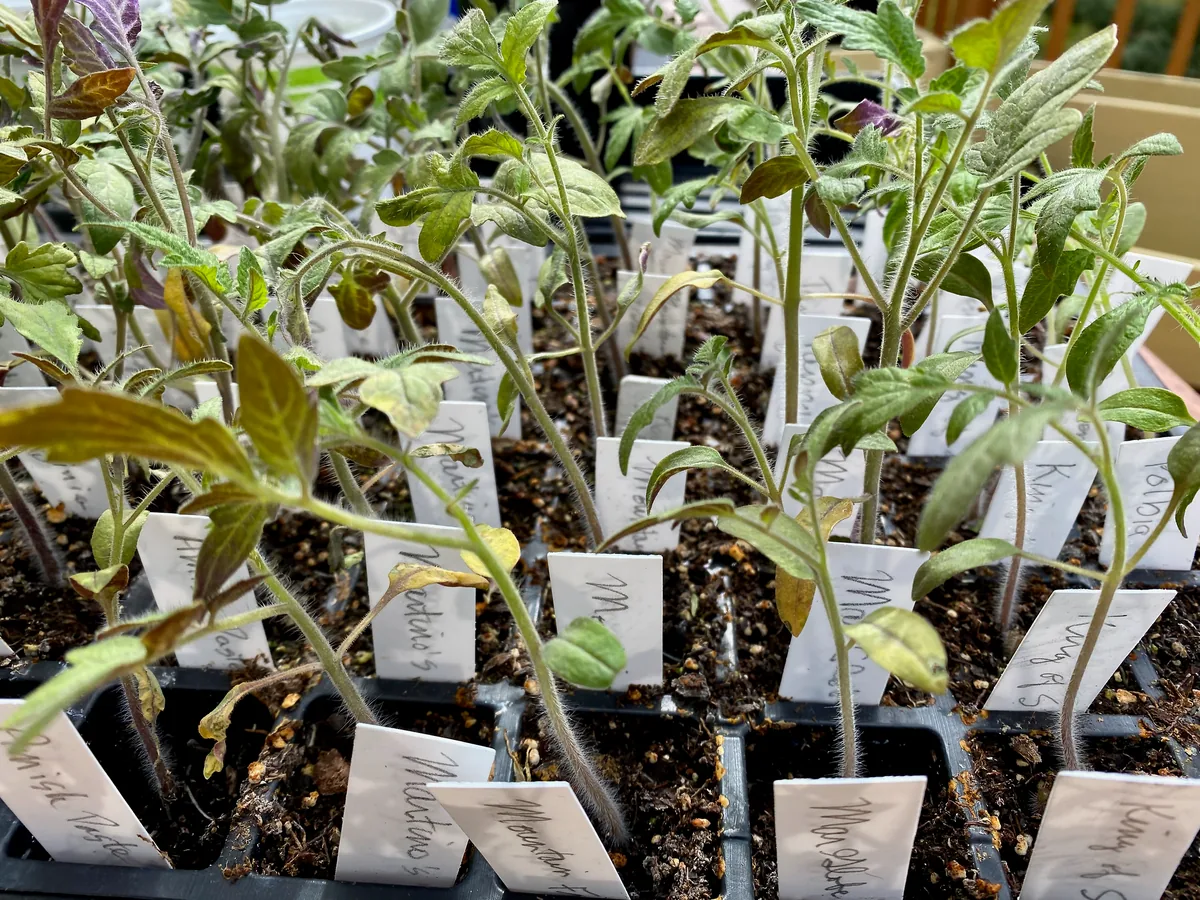
What does a leggy plant look like?
A leggy plant has long, bare stretches of stem between its leaves. In low light, the internodes (the gaps between leaves) grow long as stems stretch for light, which NC State Extension says gives “a spindly, leggy appearance.” The University of Maryland Extension adds that a plant lit from one side can develop a lean, and that leaf color can fade.
Some bare stems are just age. NC State says pothos leaves yellow and fall over time, so most of the leaves end up at the stem tips.
Why do plants stretch?
Plants stretch when light is too low. NC State’s botany chapter says too little light causes long internodes and a spindly stem, “an occurrence known as stretching or etiolation.” Maryland Extension names one more cause of spindly growth: excessive fertilizer.
| What you notice | What to check | A useful next step |
|---|---|---|
| Long gaps between leaves, small pale new leaves, a lean toward the window | How far the plant sits from the window, and whether light reaches it from one side only. | Move it closer to the light, or add a grow light. |
| Soft, stretched growth in winter while you keep feeding | Your feeding schedule and the winter light. | Feed less in winter and improve the light. |
| Bare lower stems with leaves only near the tips | Low light, or the plant’s age; on pothos, both are common. | Cut stems back above a node and root the cuttings. |
| A flowering plant that stopped blooming as it stretched | The light, first. | Improve the light before you feed. |
For spindly growth, Maryland Extension advises moving plants closer to a light source or adding artificial light, and reducing fertilizer in winter. For few or no flowers, it lists low light before excess fertilizer. NC State adds that a plant in low light may stop flowering to save energy. Leaves may also fall from the stems because there is little stored energy to support them. That can look like sudden leaf drop.
Will more light fix a leggy plant?
Better light fixes what grows next. Maryland Extension says the same plant grown in brighter light “would be more compact, better branched, and have normal size leaves.” Light intensity also drops quickly with distance from the source, it notes, so distance from the window matters.
Pruning restores the shape. NC State says pruning “can also restore a plant’s initial growth habit.” So plan on both: move the plant to better light, then cut back the bare stems.
Don’t overcorrect. Maryland Extension warns: “Excessive light is just as harmful as too little.” Leaves can turn pale or brown. If you add a grow light, it advises lighting plants for no more than 16 hours a day in total. For light levels by window and plant, see how much light a houseplant needs. If leaves are fading rather than stretching, read about pale or bleached leaves.
Where should you cut a leggy stem?
Cut just above a node, the point where a leaf joins the stem. NC State says to cut stems just above a node or where they join a larger branch, using sharp, sanitized pruners so you don’t fray the tissue.
Cutting makes a plant bushier. NC State’s botany chapter explains that removing the tip “allows lateral buds to grow,” because the tip makes a hormone that holds the side buds back. New shoots then grow from the nodes below the cut.
Palms are the exception: never cut the top off a palm. NC State explains that palms have only one growing point, so “cutting the top off a palm kills the tree.”
How do you root the tops you cut off?
The tops you remove can become new plants. The Royal Horticultural Society (RHS) suggests cutting just below a leaf joint, removing the lower leaves and keeping two or three at the top. You can root the cutting in potting mix or simply stand it in a glass of water, with the water just below the leaves.
Keep cuttings bright but out of direct sun. The RHS says they should root in three to four weeks, and that late spring or early summer is the best time, though cuttings work most of the year.
Light isn’t always the whole story. From three photos, Plant Doctor, an AI plant diagnosis app for iPhone, can suggest the species, the most likely cause and a step-by-step care plan.
Leggy plant questions
Why is my pothos leggy?
Partly age, partly light. NC State says pothos leaves yellow and fall over time, leaving most leaves at the stem ends. Its advice is to prune stems back to keep the plant bushy, and it notes the vines root easily in water. The guide to pothos yellow leaves covers the yellowing itself.
Can you fix leggy plants?
Yes, in two parts. Better light improves the new growth, Maryland Extension says, and pruning plus rooting the cuttings restores the shape, according to NC State and the RHS.
Are leggy plants bad?
Legginess isn’t a disease. It usually comes from low light, sometimes from too much fertilizer or simple age. Still, NC State notes that a plant in low light may drop leaves and stop flowering, so it’s worth fixing.
The ASPCA lists pothos as toxic to dogs and cats, with oral irritation, excessive drooling and vomiting among the signs. These notes are educational, not veterinary advice. If a pet has chewed the plant, call your vet or an animal poison control line. For hotline numbers and other plants, see which plants the ASPCA lists as toxic to cats and dogs.
Sources and further reading
Care guidance checked against the sources below. Plant Doctor’s app examples are separate from these references; the institutions do not endorse the app.
- University of Maryland Extension — Lighting for indoor plants
- University of Maryland Extension — Diagnose indoor plant problems
- NC State Extension — Extension Gardener Handbook, 18. Plants grown in containers
- NC State Extension — Extension Gardener Handbook, 3. Botany
- Royal Horticultural Society — How to take cuttings from houseplants
- NC State Extension Gardener Plant Toolbox — Epipremnum aureum
- ASPCA Animal Poison Control — Golden pothos
This guide offers general plant-care information. A photo cannot confirm every cause; a local nursery or extension service can help with severe or unclear cases.