
How do you spot thrips on houseplants?
Look for pale, silvery streaks on the leaves, often on new growth or flowers, dotted with tiny black specks. Those specks are thrips droppings. To confirm, tap a leaf or flower over white paper and watch for slender insects that run or jump. Thrips often arrive on new plants, so check recent additions first and keep the affected plant away from the rest.
Updated
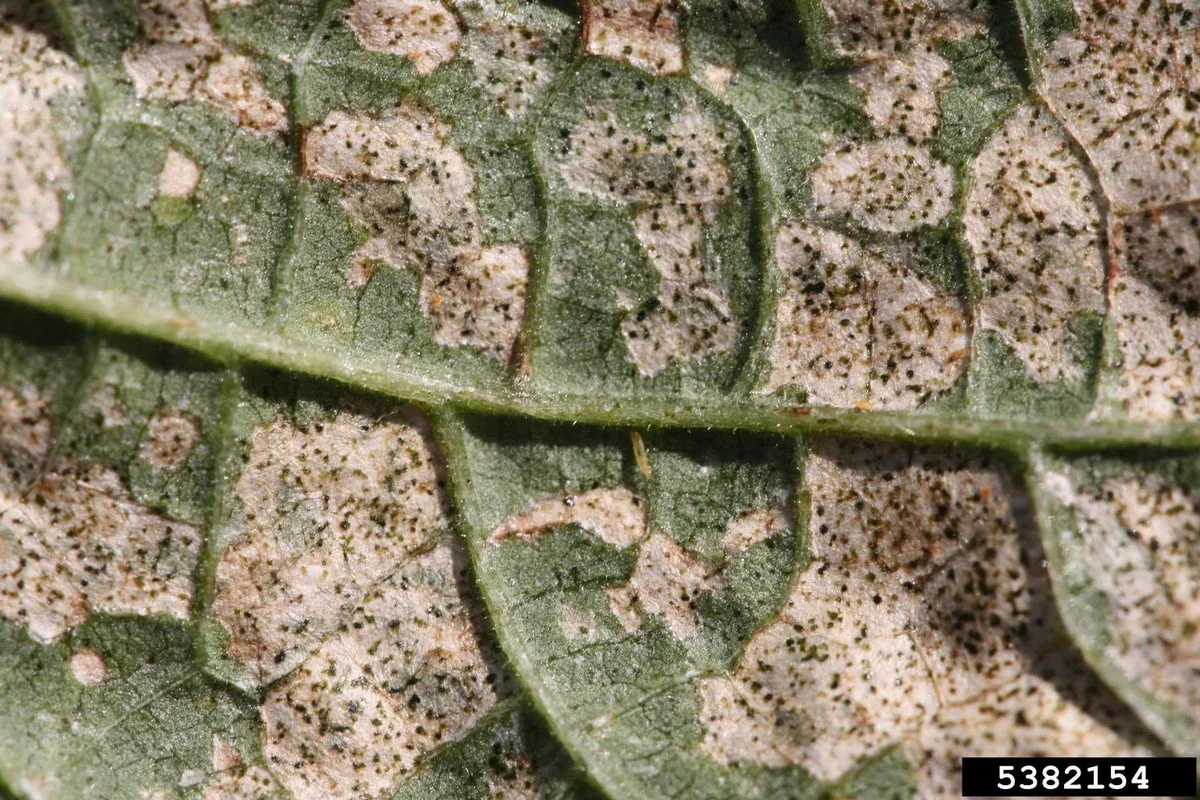
What does thrips damage look like?
Thrips damage starts as pale flecks that join into silvery streaks. The Royal Horticultural Society (RHS) says leaves often turn dull green, then silvery-white on the upper surface, marked with many tiny black excrement spots that look like small dollops of dark varnish.
The University of Maryland Extension describes the droppings as small, dark, tar-like spots glued to the plant near the damage. Young leaves that are still expanding when thrips feed can stay stunted, crinkled or curled for good. On flowers, petals become streaked or distorted, according to the University of Minnesota Extension.
How do you confirm it’s thrips?
Shake or tap a leaf or flower over white paper, as the University of California Statewide Integrated Pest Management Program (UC IPM) suggests. For flowers, South Dakota State University Extension adds a trick: blow gently into the bloom to make thrips move.
- Look closely with a hand lens. Maryland Extension describes slender, rice-shaped insects about 1 to 2 mm long that walk and can also jump.
- Hang a blue or yellow sticky card near the plant to catch flying adults, as Minnesota Extension suggests. It shows whether thrips are around.
- Make sure they’re there. UC IPM advises being certain pest thrips are present and causing damage before you act. By the time damage shows, the thrips may be gone.
Is it thrips, spider mites or something else?
| What you notice | What to check | A useful next step |
|---|---|---|
| Silvery streaks with tiny black dots | Tap over white paper. Slender insects that run or jump? | Likely thrips. Move the plant away from others and trim the worst leaves. |
| Fine pale speckles with webbing, and specks that crawl | Webbing. UC IPM says it separates spider mites from thrips. | Likely spider mites. Read about speckles with webbing. |
| New leaves twisted, crinkled or scarred as they open | Buds and leaves that are still unfurling. | Thrips or another pest on the tip. Compare causes of twisted new leaves. |
| Old silver patches, nothing on the paper | New growth over the next week or two. | The thrips may be gone, and the marks will stay. Hold off on spraying. |
| Pale leaves with no streaks or specks | Light, watering and feeding. | Probably not thrips. Compare causes of pale leaves without specks. |
| Tiny insects jumping on damp soil when you water | Do they stay on the soil? Maryland Extension says springtails rarely go onto leaves or flowers. | Not thrips. Let the soil surface dry. |
If the marks match none of the rows in this table, Plant Doctor, an AI plant diagnosis app for iPhone, can suggest the most likely cause from three photos and show the evidence behind it.
What do thrips do to roses and other garden flowers?
Outdoors, thrips often hit flowers. Western flower thrips can damage roses, UC IPM says: petals may show dark streaks and spots from feeding before the buds opened, or buds may deform and fail to open. UC IPM adds that this thrips more often damages fragrant, light-colored or white roses.
Onion thrips feed on many plants, including dahlias, and the RHS notes that feeding at dahlia shoot tips can stunt growth and distort leaves. Since thrips hide in buds, you’ll often see the damage before you see the insects, UC IPM explains. Tap an open bloom over white paper to check.
How do thrips get into your home?
Often on another plant. Thrips travel on infested plants and float long distances on the wind, according to UC IPM. South Dakota State says plants that spent the summer outdoors can bring them in, and so can open windows, since thrips can crawl through a screen. Flowers and herbs cut from the garden are another way in, a University of Alaska Fairbanks horticulturist writes.
Minnesota Extension suggests isolating new plants for one to two weeks so any pest problems have time to show.
What should you do first about thrips?
Maryland Extension suggests starting without products:
- Trim disfigured leaves and any flowers with thrips tucked inside.
- Knock thrips off with a strong spray of plain water, both sides of the leaves. A sink works indoors; a garden hose works outdoors.
Don’t count on repotting. Repotting may remove pupae in the soil, Maryland Extension notes, but not the thrips on the plant.
If thrips persist, Maryland Extension names horticultural oil and insecticidal soap as less toxic choices. Indoors, use one labeled for houseplants. Outdoors, the label must cover that plant and that site. Follow the product label, and repeat as it directs; Maryland Extension warns that missed thrips reproduce quickly. Test a small area first, and go through the checks to make before you use any product.
Thrips are difficult to control, UC IPM warns. A heavily infested plant is best discarded, according to Maryland Extension, since that’s simpler and generally cheaper than treatment.
Will thrips-damaged leaves recover?
No. Leaves won’t regain their green color once it’s lost, even after the thrips are gone, the RHS says. Pesticides won’t restore injured plant parts either, UC IPM notes. Trim marked leaves if they bother you, and judge progress by clean new growth.
Thrips questions
Do thrips live in the soil?
Part of their life is spent there. The pupae of most species drop to the soil or leaf litter, according to UC IPM. The adults and young feed on the plant, so treat the leaves and flowers, not just the pot.
Why are there thrips on my Monstera?
Monstera is one of the tough-leaved houseplants that banded palm thrips favor, along with Ficus, Dracaena and Schefflera, according to the RHS. Maryland Extension also lists aroids among commonly affected indoor plants. Holes and splits in a mature Monstera leaf are normal, though. Read about which leaf holes are normal before you treat them as damage.
The ASPCA lists some plants named on this page, such as Monstera and Schefflera, as toxic to dogs and cats. These notes are educational, not veterinary advice. If a pet has chewed a plant, call your vet or an animal poison control line. See which plants the ASPCA lists as toxic.
Sources and further reading
Care guidance checked against the sources below. Plant Doctor’s app examples are separate from these references; the institutions do not endorse the app.
- UC Statewide IPM Program — Pest Notes: Thrips
- UC Statewide IPM Program — Pest Notes: Spider Mites
- University of Maryland Extension — Thrips in home gardens
- Royal Horticultural Society — Thrips on garden plants
- Royal Horticultural Society — Indoor plants: sap feeders
- University of Minnesota Extension — Managing insects on indoor plants
- South Dakota State University Extension — Watch out for houseplant pests
- University of Alaska Fairbanks — Protecting indoor plants from thrips, other pests
- US Environmental Protection Agency — Introduction to pesticide labels
- ASPCA Animal Poison Control — Toxic and non-toxic plants list
This guide offers general plant-care information. A photo cannot confirm every cause; a local nursery or extension service can help with severe or unclear cases.