
Why is your plant suddenly dropping leaves?
Sudden leaf drop often follows a change: a move to a darker spot, a cold draft, a chilly window, or soil that stayed too wet or too dry. Start with the leaves on the floor. Losing one or two old, yellow lower leaves is normal aging. Many green leaves falling at once often points to a sudden change in light, temperature or roots.
Updated
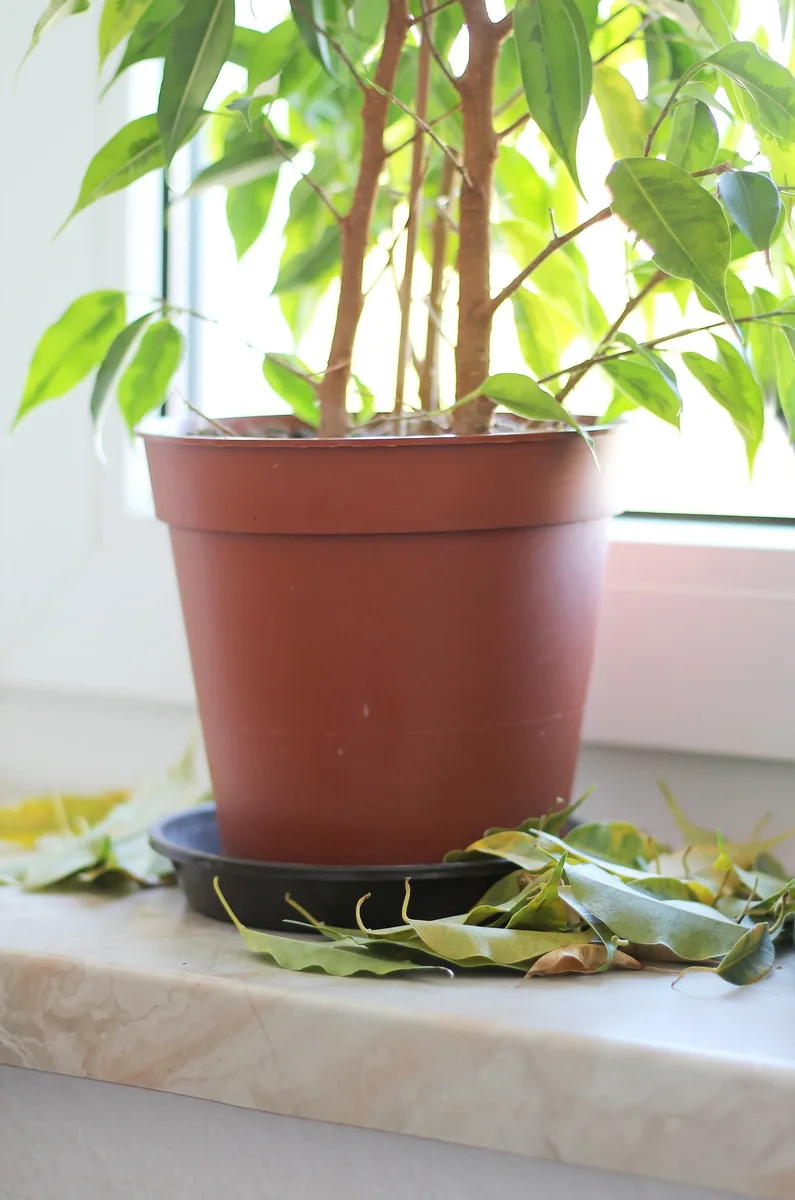
Is some leaf drop normal?
Yes. Losing only the lowest, oldest leaves is aging. University of Florida IFAS Extension (UF/IFAS) lists “Loss of lower leaves only” with the probable cause “Age” in its guidelines for indoor figs. Leaf drop after a move is common too. Missouri Botanical Garden says that if a plant is new or was moved recently, “dropping leaves is very common,” and that with good care it should put out new leaves.
What do the fallen leaves tell you?
The color of the fallen leaves is a useful clue. UF/IFAS links green leaf drop to low light or to root death in mix that may be too wet. It links yellow leaf drop to moisture stress. UF/IFAS wrote that table for indoor figs, so the pattern fits figs best.
| What you notice | What to check | A useful next step |
|---|---|---|
| One or two old, lower leaves yellowed first; new growth looks healthy | Is it only the oldest leaves? | Nothing to fix. Remove the spent leaf. |
| Green leaves falling days or weeks after a move or a new purchase | Is the new spot darker than the old one? | Give it the brightest suitable spot and leave it there. |
| Leaves dropping after a cold night or by a winter window; some look water-soaked | Cold glass, doors, air-conditioning or heating vents, curtains closed behind the plant at night. | Move it into the room, away from drafts. |
| Yellow leaves dropping, mix dry well below the surface, pot feels light | Moisture below the surface. | Water thoroughly and let it drain. |
| Old and new leaves yellowing and dropping together; the mix stays wet | Drainage, the outer pot, the stem base and the roots. | Let it dry before watering again and check the signs of root rot. |
| Speckled or webbed leaves before they fall | Leaf undersides and stems. | Isolate the plant and check for spider mites. |
The Royal Horticultural Society (RHS) says old and new leaves yellowing and dropping at the same time is a sign of overwatering. Missouri Botanical Garden notes that wet soil promotes root rot, and that a plant also drops leaves when the soil is too dry. The overwatering versus underwatering comparison helps you tell which. The University of California Statewide Integrated Pest Management Program (UC IPM) says leaves heavily infested with spider mites can turn yellow and drop off.
What changed in the last few weeks?
Think back before you act. Damage can show up well after the change that caused it.
- A move or a new home. Missouri Botanical Garden says plants taken from a greenhouse or bright spot to a darker home often drop leaves.
- Cold. NC State Extension says many species suffer chilling injury below 55°F, and badly cold-damaged leaves look water-soaked. An abrupt temperature change shows quickly, while a milder one may not show for weeks.
- Drafts. Missouri Botanical Garden names heating registers, doors and air conditioning. The RHS adds that curtains drawn on cold nights can trap cold air between the window and a plant on the sill.
- Watering. A pot that has stayed wet, or a plant that went dry for too long, can lose leaves.
What should you avoid while the plant recovers?
Stop adding changes. For newly placed indoor figs, UF/IFAS advises against moving, pruning, repotting or feeding “for about four weeks at least because plants do not need additional stresses.” That rules out feeding or repotting as a quick fix. Don’t water a pot that is still wet. Change one thing at a time, then give the plant time.
To narrow down the cause first, take three photos in Plant Doctor, an AI plant diagnosis app for iPhone: the whole plant, the most affected leaf and one more useful angle. It returns the most likely cause, the evidence behind it and a step-by-step care plan.
Why do figs drop leaves so easily?
Figs react strongly to change. Missouri Botanical Garden says weeping figs often lose leaves with “sudden, significant changes in temperature and/or light,” and that a move from bright to dim light will often trigger heavy drop. Moving the plant to a new site in stages lets it adjust. UF/IFAS calls Ficus sensitive to “radical changes in light intensities.” For the fiddle leaf fig, see fiddle leaf fig leaf drop and brown spots.
Why are leaves falling off outdoor plants?
Outdoors, the season and the weather explain a lot. In hot, dry summers, K-State Research and Extension says heat and drought stress make a tree lose leaves “that it cannot support with the available soil moisture.” Those leaves are most often yellow, though healthy-looking green ones can drop too. If the drop is spread through the tree and thins it gradually, K-State says the problem is not serious. The tree should be fine if it’s kept watered in dry spells. Supple twigs and live buds are the signs to check.
Evergreens shed too. University of Wisconsin–Madison Extension says pines and other needle conifers drop older needles toward the center of the tree, typically in fall. The change from yellow inner needles to green outer ones is abrupt. New growth turning off-color, whole branches affected, or browning at other times of year points to a real problem instead.
Spotted leaves falling from a rose point to disease. UC IPM says rose leaves infected with rust or downy mildew can drop early, and powdery mildew can make them distort and drop. Round black spots with feathery edges suggest black spot on roses. For a tree or shrub you can’t diagnose, a local extension service can help.
Leaf drop questions
Why is my plant dropping healthy green leaves?
Light, temperature and roots are the usual places to look. UF/IFAS links green leaf drop in figs to low light and to roots damaged in wet mix. Missouri Botanical Garden adds sudden changes in light or temperature.
Is it normal for indoor plants to lose leaves?
Losing the oldest lower leaves is normal, UF/IFAS says. A newly moved plant often drops leaves too and, according to Missouri Botanical Garden, should regrow them with good care.
Why are my houseplants losing leaves in winter?
The RHS says low light can turn lower leaves yellow and make them fall, and dry air from heating can cause early leaf drop. Cold windowsills add chilling, which NC State says injures many species below 55°F.
The ASPCA lists weeping fig as toxic to dogs and cats. These notes are educational, not veterinary advice. If a pet has chewed the plant, call your vet or an animal poison control line. For hotline numbers and other plants, see which plants the ASPCA lists as toxic to cats and dogs.
Sources and further reading
Care guidance checked against the sources below. Plant Doctor’s app examples are separate from these references; the institutions do not endorse the app.
- UF/IFAS Extension — Cultural guidelines for commercial production of interiorscape Ficus
- Missouri Botanical Garden — Why is my indoor plant dropping leaves?
- Missouri Botanical Garden — Why is my weeping fig dropping leaves?
- Royal Horticultural Society — How to help a poorly houseplant
- NC State Extension — Extension Gardener Handbook, 18. Plants grown in containers
- UC Statewide IPM Program — Pest Notes: Spider Mites
- UC Statewide IPM Program — Pest Notes: Roses: Diseases and Abiotic Disorders
- K-State Research and Extension — Trees losing leaves from summer stress
- University of Wisconsin–Madison Extension — Seasonal needle drop normal on evergreens
- ASPCA Animal Poison Control — Weeping fig
This guide offers general plant-care information. A photo cannot confirm every cause; a local nursery or extension service can help with severe or unclear cases.