
Yellow pothos leaves—or its natural golden markings?
Golden pothos can have yellow markings on healthy leaves. That is different from a leaf newly fading to yellow and dropping. Follow the vine, compare older and newer leaves, and check root-ball moisture before treating the color as a problem.
Updated
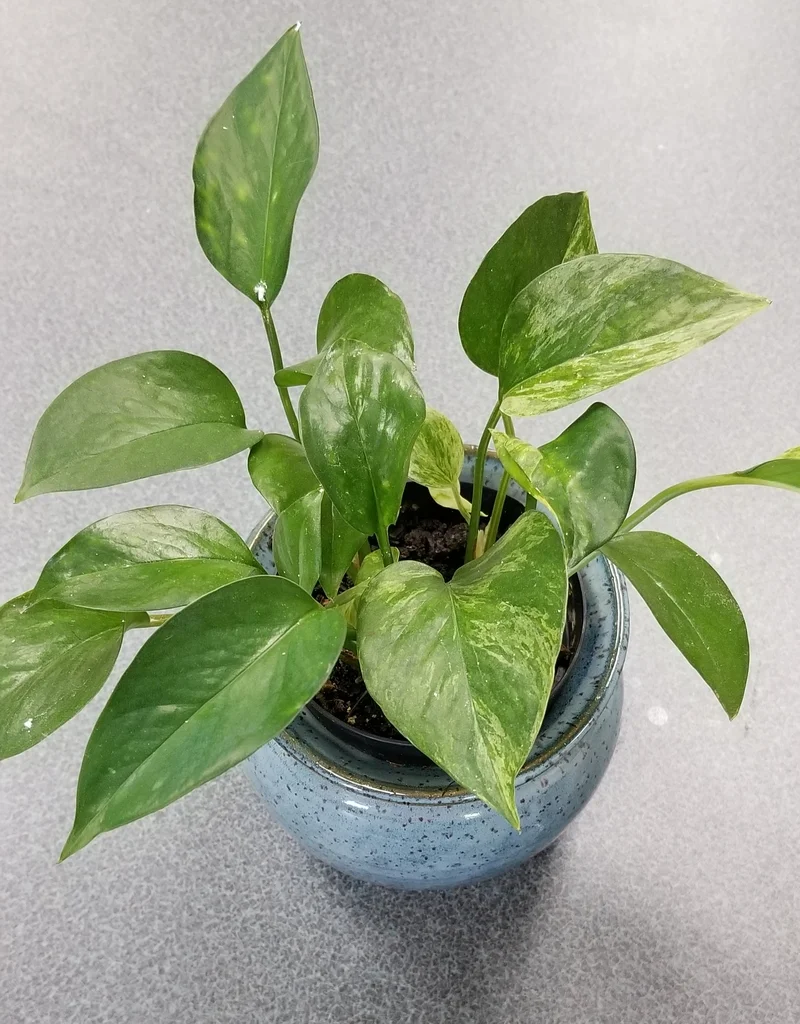
Follow the change along the vine.
| What you notice | What to check | What to do next |
|---|---|---|
| Stable golden or pale markings | Whether the same pattern has been present since the leaf developed. | Compare with its established appearance before treating normal variegation. |
| An older leaf fades and falls | The condition of the remaining vine and new growth. | Observe if the rest looks healthy; aging leaves are part of growth. |
| Several leaves yellow with damp mix | Drainage and the length of time the root ball stays wet. | Pause watering and inspect more closely if the vine or base is soft. |
| Long bare stretches or weaker growth | Light and care history, not just the latest yellow leaf. | Review its location and watering before making several changes together. |
Make the next care change specific.
NC State Extension describes pothos as a variegated or green climbing plant that tolerates low light but prefers bright indirect light. Its guide also describes older leaves yellowing and dropping along the stems.
Check whether an outer pot holds water and whether the mix dries between waterings. If it is dry, water and drain; if it remains saturated, investigate drainage instead. Avoid moving a plant abruptly from a dim corner into strong direct sun.
Pothos questions
Should I remove every yellow patch?
No. Golden pothos naturally has yellow or lighter markings. Remove only declining or damaged tissue when appropriate; do not cut healthy variegated leaves because of their normal color.
Is a yellow pothos leaf proof of root rot?
No. Color alone is not enough. Wet soil, continued decline and soft, decaying roots are more informative. Use the root-rot guide if several of those signs occur together.
Pothos is not safe for pets to chew. Refer to the ASPCA plant database; these notes are educational, not veterinary advice. Contact a vet if a pet has eaten the plant.
Sources and further reading
Care guidance checked against the sources below. Plant Doctor’s app examples are separate from these references; the institutions do not endorse the app.
- NC State Extension — Epipremnum aureum
- University of Maryland Extension — watering indoor plants
- ASPCA — toxic and non-toxic plants
This guide offers general plant-care information. A photo cannot confirm every cause; a local nursery or extension service can help with severe or unclear cases.