
Why are your plant’s leaves turning pale or white?
Pale or bleached leaves can mean too much sun, too little light, tiny pests feeding or a shortage of nutrients. Where the color fades tells you which. Washed-out patches that appear soon after a move into brighter light point to sunburn. An evenly pale plant with weak new growth points to low light. Fine pale speckles mean it’s time to check under the leaves for mites.
Updated
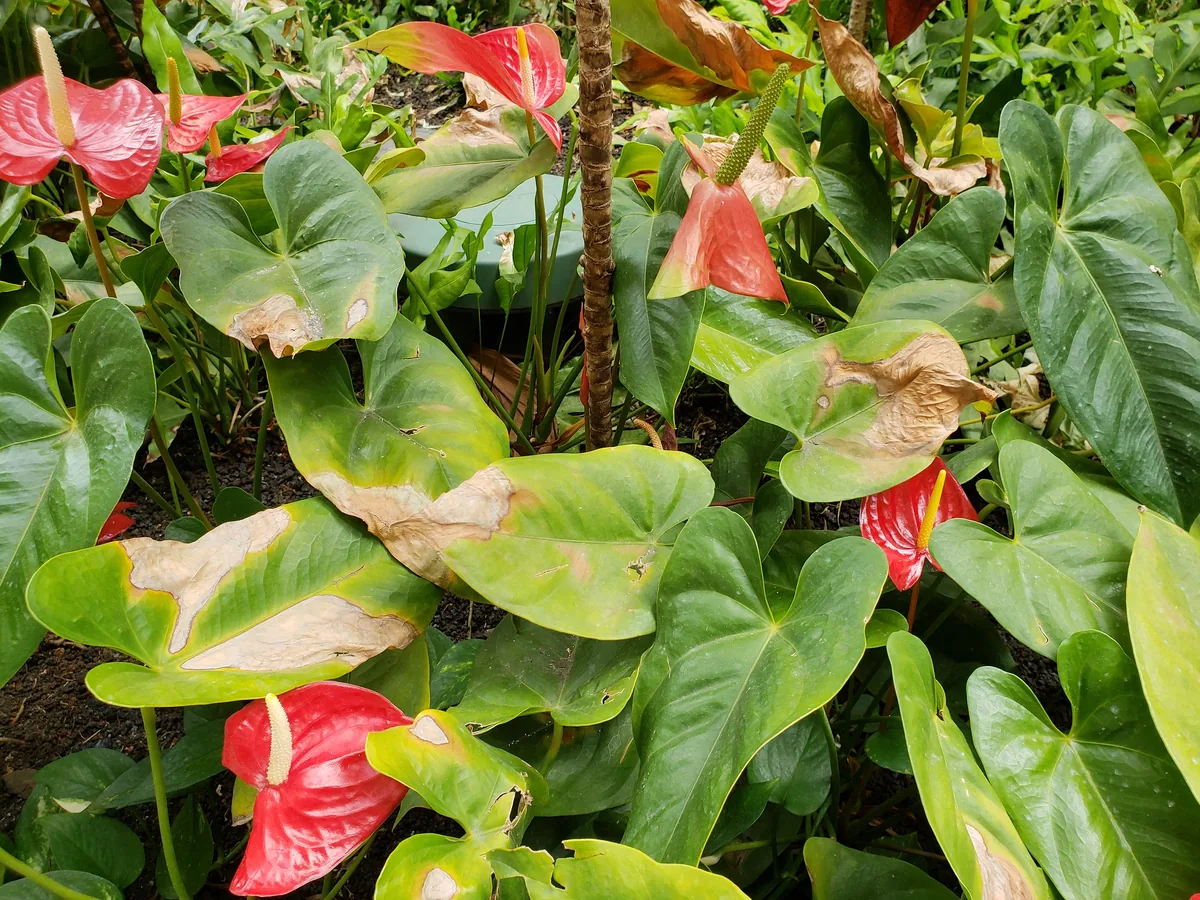
Where on the plant is the color fading?
Start with the pattern of the fading. Look at which leaves changed, which side of the plant they face and what happened in the weeks before. If the leaf has a white coating rather than faded color, read about white powder on leaves instead.
| What you notice | What to check | A useful next step |
|---|---|---|
| Bleached or washed-out patches soon after a move into brighter light | When the plant moved, and whether the soil dried out. | Move it back a little or filter the light. Bring it into brighter light gradually. |
| The whole plant evenly pale, with new growth spindly or slow | Distance from the window, curtains, the season. | Give it more light, gradually. Don’t feed it to fix the color. |
| Fine pale speckles on many leaves, a dull or bronze look, maybe fine webbing | Shake a leaf over white paper. Look underneath with a magnifier. | Confirm mites before you treat. Read about spider mite stippling. |
| Silvery, scraped-looking patches with tiny black specks | New leaves and buds, and a shake over white paper. | Read about thrips damage. |
| Older leaves pale and yellow first, slow growth, no feeding in months | Feeding history and the roots. | Feed during active growth, following the product label. |
| Newest leaves yellowing between green veins | The plant’s needs, the potting mix, hard tap water. | Ask a nursery which product suits the plant, and follow the label. |
| White or straw-colored spots after watering | Whether cold water splashed the leaves. The RHS links these spots to cold water. | Water the soil, not the leaves, with room-temperature water. |
Did the plant just move somewhere brighter?
If the pale patches appeared soon after a move, sunburn is the likely cause. Strong sun and heat break down the chlorophyll in a leaf, the University of Maryland Extension says, and the damage shows as “pale, bleached or faded areas.” Those areas eventually turn brown and brittle. Maryland Extension adds that the damage is worse when strong sun meets dry soil.
The fix is a slower change. The University of Minnesota Extension advises moving plants closer to windows gradually over one to two weeks, especially toward south- or west-facing light. It warns that a quick jump into bright sun can scorch shade-loving plants, and that pale patches or crispy edges mean the move is happening too fast. Plants going outside for the summer need the same care. Maryland Extension says plants adapted to low light can sunburn when moved straight outdoors without a hardening-off period.
Once a patch has turned brown, the guide to when bleached patches turn brown helps you sort sun damage from other spots.
Could it be too little light instead?
Yes, if the whole plant is pale and growing weakly. Iowa State University Extension and Outreach says that when growth is “pale, spindly, or slow,” light levels may be too low. Minnesota Extension notes that plants short of light make less chlorophyll and can turn pale green, then yellow, then white. Light is lowest in winter.
Don’t reach for fertilizer here. Iowa State explains that more fertilizer means more growth, and when the light can’t support that growth, the result is spindly or weak. Give the plant more light first. The guide to how much light your plant needs shows how to judge a window, and long, stretched stems have their own guide to leggy growth.
How do you check for mites or thrips?
Use white paper and a magnifier. The University of California Statewide Integrated Pest Management Program (UC IPM) says spider mite damage often first appears as “a stippling of light dots,” sometimes with a bronze cast. Shake a few leaves over a white sheet of paper. Mites show up as tiny dots that move. UC IPM adds that damage is usually worse when the plant is short of water.
Thrips leave stippling, discolored flecks or a silvery surface, according to UC IPM, usually with black, varnish-like specks of excrement. They feed hidden in buds and shoot tips, so shake those over the paper too.
Whatever you find, UC IPM’s rule is to be sure the pests are present before you treat. Mites are sometimes gone by the time the damage shows.
For a second opinion on sunburn versus mites, try Plant Doctor, an AI plant diagnosis app for iPhone. From three photos it suggests the species, then gives the most likely cause and the evidence behind it.
When is pale growth a feeding problem?
Check roots and watering first. Growing conditions such as drought, waterlogging or too little light can look like a deficiency, the Royal Horticultural Society (RHS) notes. Any root stress, from too much or too little water, can also bring on a real one.
- Older leaves first: the RHS says a nitrogen shortage gives spindly, stunted plants with pale yellow leaves, starting with the older ones. Potting mix can run short after a few months of use.
- Newest leaves first: the RHS says iron deficiency affects the youngest leaves most, with yellowing between the veins. Maryland Extension calls this the most common nutrient deficiency in indoor plants and says to look for a product labeled for houseplants or indoor plants.
- Feed only when the plant is actively growing, Iowa State advises, and follow the product label.
Pale leaf questions
Can sunburned leaves recover?
The bleached patch won’t turn green again. Maryland Extension says those areas eventually become brown and brittle. Fix the light so new leaves aren’t damaged.
What do sunburned plant leaves look like?
Pale, bleached or faded areas, which later turn brown and brittle. Iowa State lists bleached or damaged leaves as a sign that light levels may be too high.
Why are my plant’s leaves turning pale green?
It may be too little light, or a nutrient shortage in a plant that hasn’t been fed in months. Check how much light the plant gets and which leaves changed first.
Sources and further reading
Care guidance checked against the sources below. Plant Doctor’s app examples are separate from these references; the institutions do not endorse the app.
- University of Maryland Extension — Excess light on indoor plants
- University of Minnesota Extension — Spring houseplant care
- University of Minnesota Extension — Lighting for indoor plants
- Iowa State University Extension and Outreach — How to care for houseplants
- UC Statewide IPM Program — Pest Notes: Spider Mites
- UC Statewide IPM Program — Pest Notes: Thrips
- Royal Horticultural Society — Nutrient deficiencies
- Royal Horticultural Society — Leaf damage on houseplants
- University of Maryland Extension — Nutrient deficiency of indoor plants
This guide offers general plant-care information. A photo cannot confirm every cause; a local nursery or extension service can help with severe or unclear cases.