
Why are your plant’s leaves sticky?
Sticky leaves usually mean honeydew, the sugary waste of insects that feed on plant sap, such as scale, mealybugs and aphids. Honeydew drips down onto lower leaves, the shelf and the floor, so look at the stems and leaf undersides above the shiny patch. A black, sooty film on top is mold growing on the honeydew, not a separate infection of the plant.
Updated
What makes plant leaves sticky?
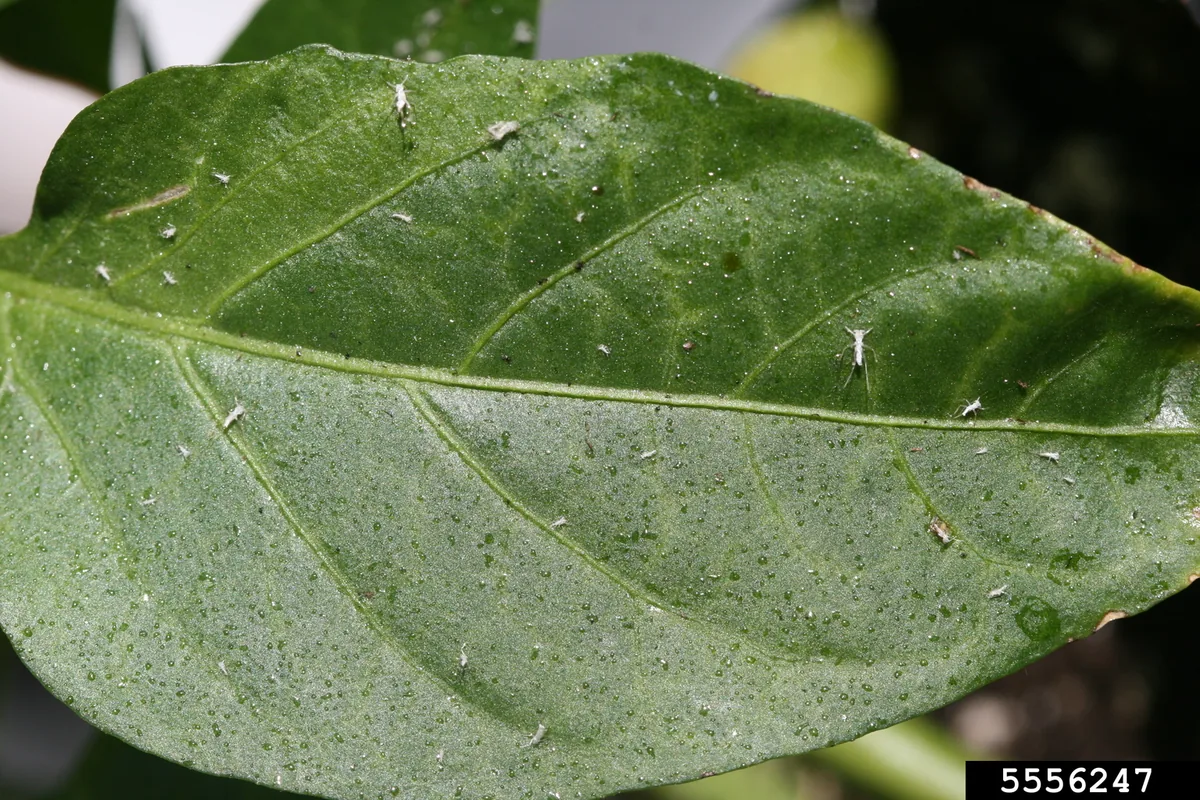
Most sticky leaves are coated in honeydew. Iowa State University Extension and Outreach describes honeydew as “a sticky, sugar-rich substance produced by insects that suck sap from plant leaves and stems.” It names scale, mealybugs and aphids as the common honeydew makers on indoor plants. The University of California Statewide Integrated Pest Management Program (UC IPM) adds whiteflies to the list.
Spider mites aren’t on either list. If you see fine webbing on the leaf undersides rather than shine, check for spider mites instead.
Where should you look for the insects?
Look above the sticky patch. Iowa State says honeydew “often coats lower leaves, tables, and floors,” so the shine marks where it fell. The insects are usually higher up: on stems, leaf undersides, leaf joints, growing tips and buds. Ants on the plant are a clue too, since UC IPM says ants feed on honeydew.
| What you notice | What to check | A useful next step |
|---|---|---|
| Small brown or black bumps along stems or under leaves | Do the bumps sit in clusters along the stems? That points to scale. | Isolate the plant and read the guide to scale insects. |
| White, cottony clusters in leaf joints or under leaves | Lift the fluff and look for soft insects underneath. That points to mealybugs. | Isolate the plant and see how to get rid of mealybugs. |
| Small soft green, brown or reddish insects on tips and buds | Are they bunched on new growth? That points to aphids. | Rinse or wipe them off, then read the aphid guide. |
| Tiny white insects that fly up when you touch the plant | Turn over the lower leaves. Young whiteflies sit on the undersides. | Isolate the plant and keep checking the lower leaves. |
| A black, soot-like film that wipes off | Sooty mold growing on honeydew. Look above it for insects. | Wipe it off with a damp cloth, then deal with the insects. |
| Sticky drops on hoya flowers and no insects anywhere | Check the whole plant once more, including leaf undersides. | Possibly normal. Wipe it if it bothers you and check again in a few days. |
Iowa State describes scale as small bumps clustered along stems and under leaves, and mealybugs as cottony white masses in leaf joints. The University of Maryland Extension calls soft scale “raised black or brown bumps on leaves and stems” and places young whiteflies on lower leaf surfaces. Not every scale makes honeydew. UC IPM says armored scales don’t secrete it, while soft scales do.
What is the black film on sticky leaves?
The black film is sooty mold, a fungus that grows on honeydew. UC IPM says sooty mold “doesn’t infect plants.” It can still do harm. A heavy coat keeps sunlight from reaching the leaf, and coated leaves may age early and drop. That is one reason a badly infested plant can start dropping leaves.
The mold goes away once the insects do. UC IPM says that when honeydew producers are reduced, sooty mold “will gradually decrease,” and that most plants tolerate a small insect population and a little sooty mold.
How do you clean sticky leaves safely?
Rinse the plant or wipe it with a damp cloth. Iowa State suggests starting with “a good rinse or wipe-down using a damp cloth” to remove honeydew and sooty mold and to knock off aphids and mealybugs.
Cleaning isn’t control, though. As Iowa State puts it, “To get rid of honeydew, you have to control the insects that cause it.” If you use an insecticide, choose one labeled for houseplants. Iowa State says to check that both the plant species and the pest are listed on the label. Follow the product label, and expect to repeat treatments. Read the checks to make before you spray first. Iowa State adds that a heavily infested plant may be better discarded before the insects spread to other houseplants.
Plant Doctor, an AI plant diagnosis app for iPhone, helps when the insect stays hidden. Take three photos, including the most affected leaf, and you get the most likely cause with the evidence behind it, plus a step-by-step care plan.
When is a sticky plant normal?
A few plants make sticky sugar on their own. Rule out insects first, then consider these:
- Hoya. NC State Extension says hoya flowers “may produce a sticky sap.”
- Cattleya orchids. A New Mexico State University Extension column lists cattleya orchids and hoya among houseplants reported to have nectar glands outside the flower. It says such glands are “thought to be enticements for beneficial insects.”
- Stressed plants. Some plants, including Cymbidium orchids and Ctenanthe, make sticky deposits in response to cultural stress, according to the Royal Horticultural Society (RHS). Such symptoms “indicate poor growing conditions,” the RHS says. Warm days followed by cold nights can also rupture cells and release sugary drops.
Even then, a sticky plant with no insects deserves a second look in a few days. For a severe or valuable case, a local nursery or extension service can take a look.
Sticky leaf questions
Why are my orchid leaves sticky?
Check for mealybugs and scale first. Maryland Extension says mealybugs can hide in leaf sheaths and bud scales as well as on leaves. If you find no insects, the drops may be the plant’s own sugar: NMSU’s column lists cattleya orchids, and the RHS names Cymbidium under stress.
What bug leaves sticky residue on plants?
Sap-feeding insects. On houseplants, Iowa State names scale, mealybugs and aphids, and UC IPM adds whiteflies. Look on the stems and leaf undersides above the sticky spot.
Is honeydew bad for my plant?
The insects making it are the bigger problem. UC IPM says most plants tolerate a small insect population and light sooty mold, but a heavy coat can block light and lead to early leaf drop.
Sources and further reading
Care guidance checked against the sources below. Plant Doctor’s app examples are separate from these references; the institutions do not endorse the app.
- Iowa State University Extension and Outreach — What is this sticky substance all over the table, floor, and lower leaves of my houseplant?
- UC Statewide IPM Program — Pest Notes: Sooty Mold
- UC Statewide IPM Program — Pest Notes: Scales
- University of Maryland Extension — Diagnose indoor plant problems
- Royal Horticultural Society — Leaf damage on houseplants
- NC State Extension Gardener Plant Toolbox — Hoya carnosa
- New Mexico State University, Southwest Yard and Garden — Extrafloral nectaries are extraordinary
This guide offers general plant-care information. A photo cannot confirm every cause; a local nursery or extension service can help with severe or unclear cases.