
What are the brown bumps on your plant’s stems?
Brown bumps that flake off when you push a fingernail under them are usually scale insects, sap feeders living under a waxy cover. Bumps that won’t budge and look like part of the stem are more likely plant tissue, such as small roots forming on the stem. If it’s scale, scrape off what you can and plan on repeat treatments, because indoors new young hatch all year.
Updated
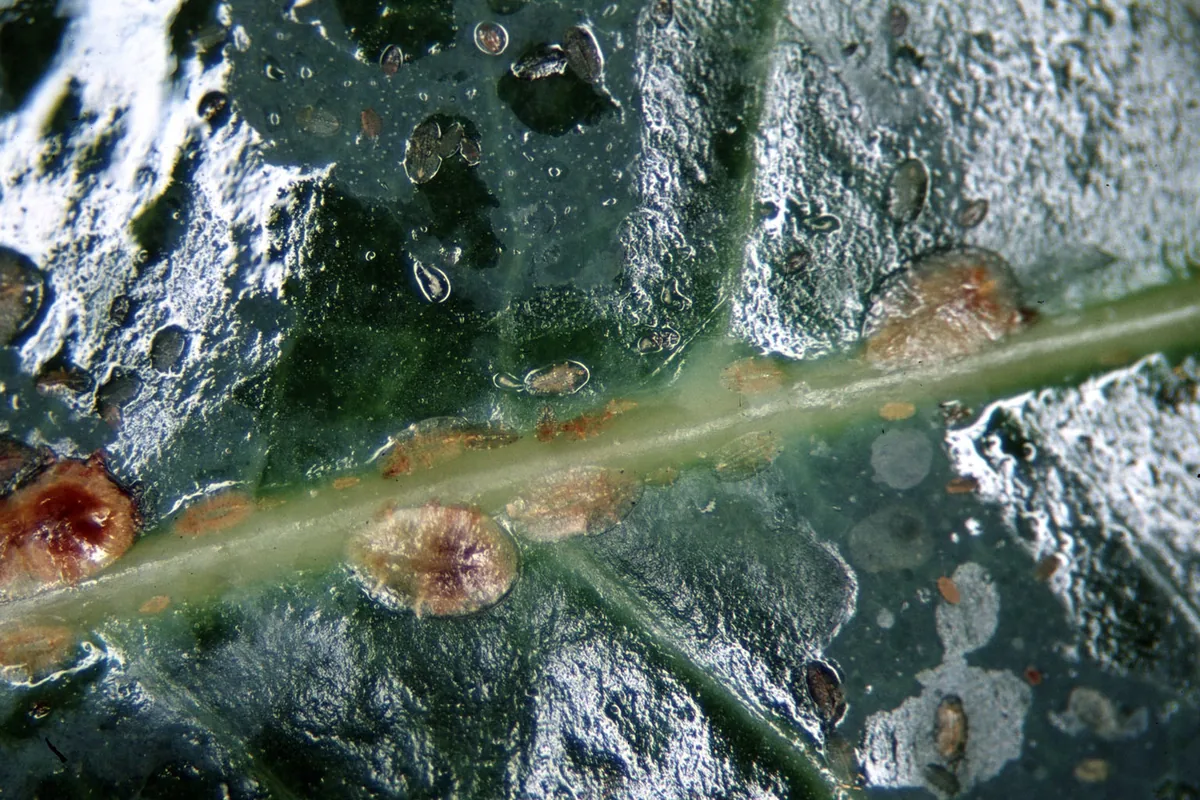
How can you tell if the bumps are scale insects?
Push a fingernail under one bump. The University of Maryland Extension says scale insects should easily flake off with a fingernail, a toothpick, a cotton swab or a soft toothbrush. Plant tissue stays put.
Look along the veins on the leaf undersides and on the stems. The University of Minnesota Extension advises checking the mid-veins closely. The Royal Horticultural Society (RHS) describes shell-like bumps on stems and leaf undersides; those bumps are the insects’ outer coverings.
Scale is easy to miss. The University of California Statewide Integrated Pest Management Program (UC IPM) says scales lack an obvious head or legs and don’t look like most insects. Sticky leaves are a common clue: scale insects excrete a sweet, sticky honeydew that lands on lower leaves, furniture and carpet, according to Iowa State University Extension and Outreach.
Are the bumps scale, mealybugs or part of the plant?
| What you notice | What to check | A useful next step |
|---|---|---|
| Domed tan to brown bumps along veins and stems, sticky leaves below | Scrape one. Does the whole insect lift off? | Likely soft scale. Maryland Extension calls brown soft scale a common houseplant pest. Isolate the plant and remove what you can. |
| Small flat bumps with no stickiness | Lift a cover. Does a body stay behind on the plant? | Likely armored scale. Remove what you can, and expect any spray to need thorough coverage. |
| Bumps that won’t scrape off and look like part of the stem | Are they firm and growing from the stem itself? | Probably plant tissue. A Maryland Extension answer identified such bumps as small roots that form on stems in humid conditions. No treatment needed. |
| White cottony fluff with soft insects that crawl slowly | Lift the fluff. Are there oval insects or orange-pink eggs underneath? | Probably mealybugs. Read about white cottony fluff. |
| White or gray waxy crust on crape myrtle bark, with black mold | Crust on stems, branch crotches and pruning cuts. | Likely crapemyrtle bark scale, as Clemson Cooperative Extension describes it. Ask your local extension office about timing. |
| Flat brown spots in the leaf, not raised | Run a finger over them. Nothing sticks up. | A spot pattern, not a pest. Compare causes of flat brown spots. |
Is it soft scale or armored scale?
The scrape tells you. A soft scale’s cover is its body, UC IPM explains, so flipping it removes the insect and cover together. An armored scale’s cover lifts off and leaves the insect body behind on the plant.
- Soft scales are larger, rounded and humped, and excrete honeydew, according to UC IPM. Maryland Extension calls honeydew the main sign of soft scale.
- Armored scales are tiny and flat and don’t make honeydew. For them, UC IPM adds, thorough spray coverage is especially critical.
If the leaves are sticky, the honeydew needs cleaning too. See sticky leaves and sooty mold.
How do you get rid of scale on a houseplant?
Start by hand. Maryland Extension advises quarantining plants with scale, then scraping them off. Removing them also makes it easier to see whether new ones appear after treatment.
- Scrape off small numbers with a fingernail file or something similar, as Minnesota Extension suggests.
- Prune heavily infested stems if only a few parts of a small plant are affected, as UC IPM suggests.
- If you still need a product, Maryland Extension names horticultural oil and insecticidal soap. Choose one labeled for houseplants, and follow the product label. Outdoors, the label must cover that plant and that site.
- Check the label for your plant first. Maryland Extension warns that not all houseplants tolerate every pesticide, and ferns are sensitive to many ingredients. Test a small area.
Homemade soap sprays are a different matter: see why not dish soap. The checks to make before you use any product apply to every spray.
Bumps that won’t scrape off can be hard to name. Plant Doctor, an AI plant diagnosis app for iPhone, uses three photos to suggest the most likely cause and the evidence behind it, then sets out a step-by-step care plan.
When should you treat scale, indoors and out?
Treat when the young are out, which indoors means repeatedly. Iowa State says scale insects are vulnerable to contact sprays only in the crawler stage. Crawlers are tiny and usually yellow to orange, and they settle down to feed within a day or two, according to UC IPM.
Indoors, there’s no single season. Scale on houseplants doesn’t reproduce at a specific time, Iowa State notes, and the RHS reports that the scale insects most likely found indoors breed all year. So repeat as the label directs, and check stems and new leaves with a hand lens between rounds.
Outdoors, timing matters more. Most species on outdoor plants have one generation a year, according to the RHS. UC IPM says horticultural oil works on deciduous plants when sprayed soon after most crawlers have emerged. Crawler dates vary by species and region. In South Carolina, Clemson reports that crapemyrtle bark scale crawlers hatch from mid- to late April through May, so ask your local extension office for your area.
How do you know if the scale is dead?
Squish a few. Dead scales fail to exude fluid when squished, UC IPM notes. Maryland Extension adds that scale attacked by parasites may be a different color, often black, with holes in the cover.
Don’t judge by the old bumps alone. Dead scales can stay firmly attached, the RHS warns, so judge success by whether new growth stays free of scale. If it doesn’t, a heavily infested houseplant is often best discarded, according to both Iowa State and Maryland Extension.
Scale insect questions
Is scale on plants contagious?
Yes, it can spread. The RHS says soft scale crawlers are small enough to be blown around in air currents, and calls this the main way plants are colonized. Keep an infested plant apart from the others, and inspect new plants before they join them.
Do scale insects kill plants?
Not usually. Iowa State says a small infestation causes little harm to a healthy houseplant, but a heavy one can stunt growth and, in severe cases, kill the plant. Most plants tolerate low to moderate numbers, according to UC IPM.
The ASPCA lists crape myrtle, named on this page as a host, as non-toxic to dogs and cats. A treated plant is a separate question: follow the product label on keeping pets away. These notes are educational, not veterinary advice. If a pet has chewed a plant, call your vet or an animal poison control line. See which plants the ASPCA lists as toxic.
Sources and further reading
Care guidance checked against the sources below. Plant Doctor’s app examples are separate from these references; the institutions do not endorse the app.
- UC Statewide IPM Program — Pest Notes: Scales
- Iowa State University Extension and Outreach — Sticky leaves and small bumps on houseplant stems
- University of Maryland Extension — Scale insects on indoor plants
- University of Maryland Extension — Indoor plant insects
- University of Maryland Extension — Q&A: What are these things on our basil stems?
- Royal Horticultural Society — Scale insects
- Royal Horticultural Society — Soft scale
- Royal Horticultural Society — Indoor plants: sap feeders
- University of Minnesota Extension — Managing insects on indoor plants
- Clemson Cooperative Extension — Crapemyrtle bark scale in South Carolina
- US Environmental Protection Agency — Introduction to pesticide labels
- ASPCA Animal Poison Control — Crape myrtle
This guide offers general plant-care information. A photo cannot confirm every cause; a local nursery or extension service can help with severe or unclear cases.