
What is the white powder on your plant’s leaves?
White powder on leaves can be powdery mildew, the wax of mealybugs, or minerals left by hard water or a humidifier. Indoors, wipe one patch with a damp swab and look closely. A soft insect under fluffy wax points to mealybugs. Round spots that keep coming back point to mildew. A white film that also coats the pot or shelf points to minerals.
Updated
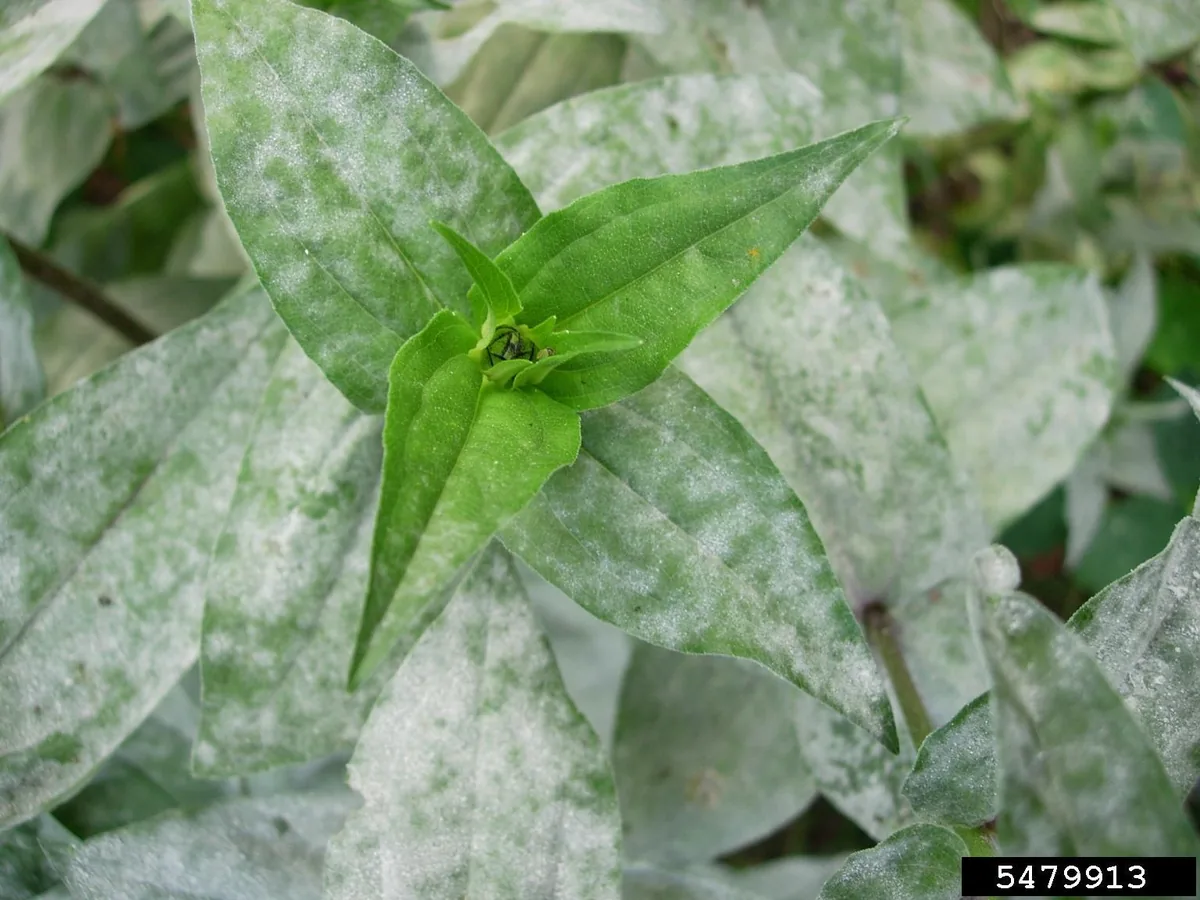
What could the white powder on your plant be?
Three common causes look alike. Powdery mildew is a fungus on the leaf surface. Mealybugs are sap-feeding insects coated in white wax. Mineral film is what hard water leaves when it dries on a leaf.
Each one needs a different fix, so name it first. Purdue University’s Plant and Pest Diagnostic Laboratory notes that mildew is often mistaken for dirt or dust on indoor plants.
How can you tell mildew, mealybugs and minerals apart?
Two checks sort most cases: wipe one patch and look closely, then look at the shelf around the plant. The University of California Statewide Integrated Pest Management Program (UC IPM) says all powdery mildew fungi need living plant tissue to grow. So a white film that also coats the pot, saucer or windowsill is unlikely to be mildew.
| What you notice | What to check | A useful next step |
|---|---|---|
| Fluffy white wax in leaf joints, under leaves or along stems | Lift a clump with a swab. Look for a soft, oval, segmented insect underneath, and check the crown and stems near the soil. | Most likely mealybugs. Check nearby plants for them too. |
| Flat, dusty round spots on the leaf surface that join up | Rub one spot. Mildew lifts only partly and comes back, and it sits only on living leaves, stems and buds. | Most likely powdery mildew. Isolate the plant and remove the worst leaves. |
| Crusty, crystal-like white film where water dried | Is the same film on the pot, saucer, shelf or window? Do you mist with tap water or run an ultrasonic humidifier nearby? | Most likely minerals. Switch to low-mineral water and watch whether the film returns. |
The test narrows the cause; it doesn’t prove it. For leaves fading to white with no powder, see pale or bleached leaves instead.
What should you do about powdery mildew indoors?
Start with the surroundings. Purdue says cultural controls are “usually just as effective and preferable” to chemicals for powdery mildew in the home. At the first sign, isolate the plant and remove the infected parts. Missouri Botanical Garden suggests discarding a severely infected plant.
- Give the plant space and moving air. Purdue advises against crowding.
- Don’t mist the plant, and keep water off the leaves when you water. Purdue lists poor air circulation, low light and cool rooms near 70°F as conditions that favor the disease indoors.
Missouri Botanical Garden says mildew impairs photosynthesis and can stunt growth. For a valuable plant, it suggests a fungicide labeled for indoor use. Follow the product label for how and how often. Before you use any product, read the checks to make before you spray.
Why does powdery mildew show up on garden plants?
Outdoors, powdery mildew is a common disease on squash, pumpkins and cucumbers, and on roses, zinnias, bee balm (monarda) and many other garden plants. UC IPM says it is common in warm, dry weather and, unlike many diseases, doesn’t need moist conditions. Moderate temperatures of 60° to 80°F and shade encourage it. Infected leaves can yellow, brown and drop early.
To prevent it, UC IPM advises planting in sun, spacing plants for air flow and avoiding too much nitrogen fertilizer, which makes lush, shady growth. Prune out small infections. Next season, choose resistant varieties, which UC IPM lists for rose, zinnia, squash and cucumber, among others. Squash, cucumbers, melons and pumpkins may need a fungicide. UC IPM notes that many of these products must go on before, or no later than, the first sign of disease. If you use one, pick a product labeled for that plant and for use where it grows, and follow the product label.
Black spots on roses are a different disease; compare them with the signs of black spot.
What if the white fluff is mealybugs?
Mealybugs hide in protected spots: UC IPM names the crown of a plant, branch crotches and stems near the soil. Sticky honeydew and black sooty mold are other signs. UC IPM says mealybugs suck sap and weaken plants. It also warns that cottony cushion scale, woolly aphids and whiteflies make wax too, so look at the insect beneath the wax.
Treatment has its own page: how to get rid of mealybugs. If leaves feel tacky too, the guide to sticky leaves shows where to look for the insects.
How do you stop mineral spots from coming back?
Change the water. The University of Maryland Extension says mineral deposits come from hard water and show up as white crystal-like coatings on leaves, or as a crust on the mix or pot. Its advice is to use water low in dissolved minerals.
A humidifier can do the same. The US Environmental Protection Agency (EPA) says ultrasonic and impeller humidifiers are very efficient at putting tap-water minerals into the air. Some people notice a “white dust” on nearby surfaces. The EPA suggests distilled water.
Don’t treat the film as harmless. Maryland Extension says salt deposits can cause desiccation or “burning” of plant tissue. It also suggests flushing the mix from the top with plenty of clean water. A white crust on the soil is the same problem, and the page on brown leaf tips covers salt buildup.
When the swab test leaves two causes in play, send three photos to Plant Doctor, an AI plant diagnosis app for iPhone. It names the most likely cause, shows the evidence behind it and lays out a step-by-step care plan.
White powder questions
How do I clean white stuff off plant leaves?
Identify it first. Missouri Botanical Garden says rubbing removes mildew only partly and won’t eliminate the fungus. Mealybugs need the steps on the mealybug page. For mineral film, the fix is the water: Maryland Extension advises water low in dissolved minerals.
Can powdery mildew spread to my other plants?
It can spread to related plants. Missouri Botanical Garden explains that each mildew species attacks a limited range of plants, so mildew on one plant may not spread to a dissimilar one. Purdue still advises isolating an infected plant.
Does baking soda get rid of powdery mildew?
The evidence is thin. Missouri Botanical Garden mentions a baking soda spray some gardeners use, but warns it may damage some plants. Purdue says cultural steps usually work as well as chemicals indoors, so start there.
Sources and further reading
Care guidance checked against the sources below. Plant Doctor’s app examples are separate from these references; the institutions do not endorse the app.
- Purdue University Plant and Pest Diagnostic Laboratory — Powdery mildew on houseplants
- Missouri Botanical Garden — Powdery mildew, indoors
- UC Statewide IPM Program — Pest Notes: Powdery Mildew on Ornamentals
- UC Statewide IPM Program — Pest Notes: Powdery Mildew on Vegetables
- UC Statewide IPM Program — Pest Notes: Mealybugs
- University of Maryland Extension — Mineral and fertilizer salt deposits on indoor plants
- US Environmental Protection Agency — Use and care of home humidifiers
This guide offers general plant-care information. A photo cannot confirm every cause; a local nursery or extension service can help with severe or unclear cases.