
How do you get rid of mealybugs on houseplants?
Move the plant away from the others. Then remove every mealybug you can find in the leaf joints and leaf sheaths, on the pot and, if the plant is declining, on the roots. Small colonies can be picked or dabbed off. Larger ones need repeated treatment with a product labeled for houseplants. If they keep coming back after weeks of effort, discarding the plant is often the sensible call.
Updated
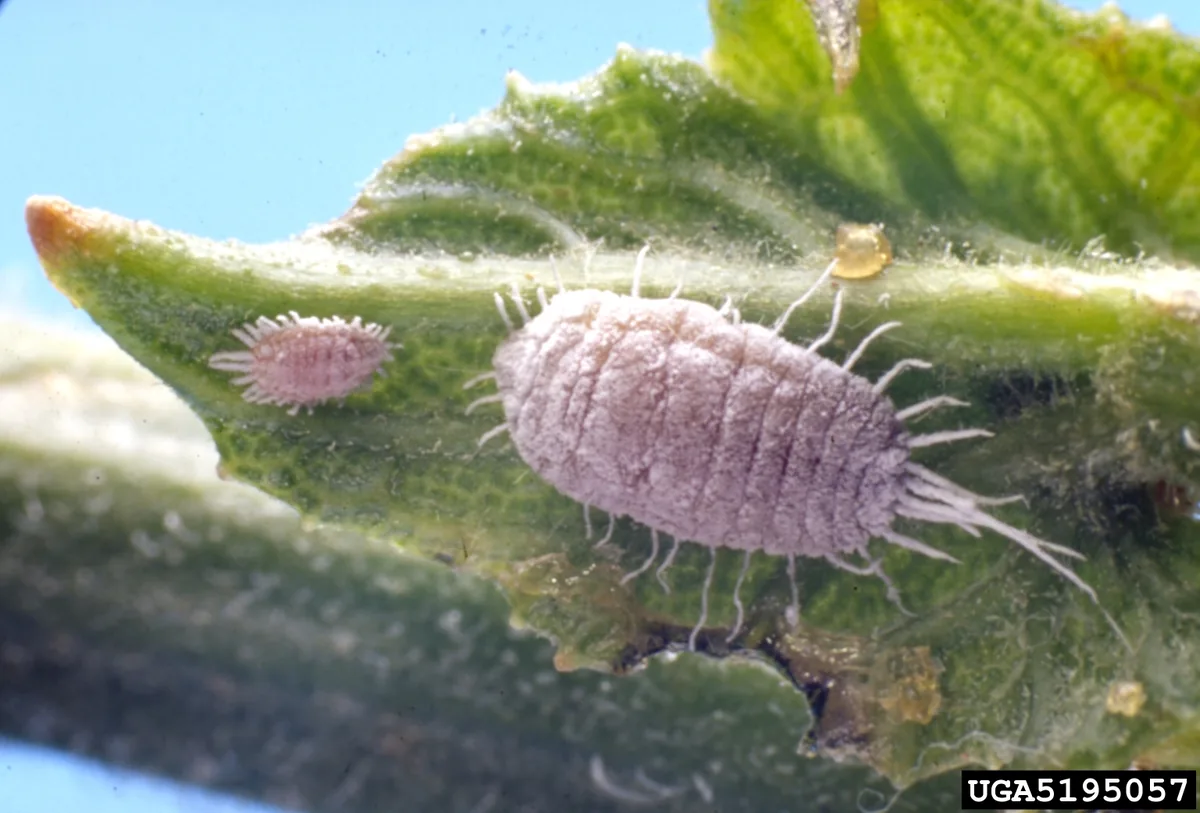
What do mealybugs look like, and where do they hide?
Mealybugs look like small tufts of white cotton. The University of California Statewide Integrated Pest Management Program (UC IPM) describes soft, oval, segmented insects covered with wax. Newly hatched young, called crawlers, are yellow to orange or pink and have no wax yet. Under the fluff you’ll find the insects or their orange-pink eggs, according to the Royal Horticultural Society (RHS).
Mealybugs pick sheltered spots. The RHS points to leaf joints, leaf sheaths and the gaps between twining stems. UC IPM adds the crown of the plant and stems near the soil. They can also turn up on the outside of the pot, according to the University of Maryland Extension, and below the soil surface on the main stem, according to the University of Minnesota Extension.
Then there are the roots. Ground mealybugs usually aren’t seen until a plant is dug up, UC IPM notes.
Is the white fluff mealybugs or something else?
Lift the fluff with a toothpick and look underneath. Several pests make wax and honeydew, so UC IPM advises examining the insect beneath the wax.
| What you notice | What to check | A useful next step |
|---|---|---|
| White cottony tufts in the leaf joints | Soft oval insects or orange-pink eggs under the fluff. | Mealybugs. Move the plant away from others today. |
| A flat white powder across the leaf surface | Does it wipe off evenly, with nothing alive under it? | Probably not mealybugs. Compare white powders. |
| White waxy fluff on the roots when you unpot | Slow-moving insects inside the wax. The RHS says root mealybugs are covered in white wax. | Root mealybugs. See when to discard, below. For fuzz on the soil surface, check for mold instead. |
| Tan or brown bumps that don’t move | Shell-like bumps on stems and leaf undersides, as the RHS describes scale. | Probably scale. Scale egg masses can be mistaken for mealybugs, the RHS adds. Read about brown bumps that don’t move. |
| Sticky leaves or a black coating below the colony | Honeydew from the insects, and sooty mold growing on it. | Wipe the leaves and look above them. Read about sticky leaves and sooty mold. |
How do you get rid of mealybugs step by step?
Remove what you can, then follow up for weeks. Maryland Extension calls mealybugs very difficult to control, so plan on several rounds.
- Isolate the plant so the infestation doesn’t spread, as Maryland Extension advises.
- Pick off what you can see, and prune out the worst stems, as UC IPM suggests. Minnesota Extension adds tweezers or a cotton swab dipped in alcohol.
- On sturdy plants, knock down exposed mealybugs with a forcible spray of water, another UC IPM suggestion. Repeat it every few days.
- For larger infestations, use an insecticidal soap, horticultural oil or neem oil product labeled for houseplants. These give some suppression, especially of young nymphs with less wax, according to UC IPM. Test a leaf or two first; the University of New Hampshire Extension warns that soaps and oils can burn the foliage of some plants. Follow the product label, including how often to repeat.
- Clean or throw out pots, saucers and stakes after checking them for mealybugs and egg sacs, as UC IPM advises.
- Check the plant every time you water. Retreatment may be needed, Maryland Extension warns.
Skip kitchen soap mixes, and run through the checks to make before you use any product.
White fluff isn’t always mealybugs. Plant Doctor, an AI plant diagnosis app for iPhone, can help tell it from mildew or mold: snap three photos and it suggests the most likely cause, then lays out a step-by-step care plan.
Why do mealybugs keep coming back?
Mealybugs come back because a few usually survive. None of the available insecticides will likely control every single insect, UC IPM explains, so you need to watch and treat again.
- Eggs. Females of most species lay 100 to 200 or more eggs in cottony sacs, according to UC IPM, and many species reproduce without mating.
- Wax. The waxy coat repels most contact sprays.
- Hiding. Colonies wedged into crevices are hard to reach, so a spray can miss them.
- Pots, stakes and saucers. A Minnesota Extension educator writes that mealybugs can live on containers and other plant supplies.
- An old plant. UC IPM suggests tossing older “grandmother” plants that may keep reinfesting new ones.
- The roots. Ground mealybugs feed on the roots, out of reach of leaf sprays.
- Patio plants coming in for winter. Minnesota Extension advises checking every plant and its container before you bring it indoors.
Outdoors, mealybugs are usually less of a fight. In gardens, natural enemies keep most species in check, UC IPM notes, and it advises against broad-spectrum insecticides that kill those enemies. Indoor plants usually lack that help.
When is it time to throw out a plant with mealybugs?
Discarding often makes sense, and it protects the rest of your plants. Consider it when:
- The infestation is severe or long-running. UC IPM suggests discarding houseplants rather than treating them again and again.
- The plant is heavily infested. Maryland Extension advises discarding such plants, and the RHS finds it can be simpler than trying to eliminate the mealybugs.
- You find root mealybugs. UC IPM calls them even more difficult to control and advises disposing of infested plants quickly.
- Other plants are at risk. Discarding avoids exposing them to the same pest, Minnesota Extension notes.
Throw out the mix with the plant, and clean or discard the pot. For new plants, the RHS suggests keeping them apart for at least a month before they join your collection.
Mealybug questions
Does rubbing alcohol kill mealybugs?
For light infestations, yes. Maryland Extension says a cotton swab dipped in household alcohol and dabbed on each mealybug can control a light infestation, but keep the alcohol off the leaves. The UC IPM mealybug Pest Note advises testing on a small part of the plant a day or two beforehand. A swab won’t reach root mealybugs.
Do mealybugs live in the soil?
Some do. Ground mealybugs feed on roots and are most often reported on African violets and gardenias, according to UC IPM. You usually see them only when you unpot the plant. Look for white wax on the roots.
Can you ever get rid of mealybugs?
Light infestations can be cleared with steady effort. Heavy ones may not be. In many cases it may be impossible to eliminate mealybugs, the RHS warns. UC IPM adds that healthy plants can tolerate low numbers without much damage, so catching them early counts.
The ASPCA lists some plants named on this page, such as gardenias, as toxic to dogs and cats. These notes are educational, not veterinary advice. If a pet has chewed a plant, call your vet or an animal poison control line. See which plants the ASPCA lists as toxic.
Sources and further reading
Care guidance checked against the sources below. Plant Doctor’s app examples are separate from these references; the institutions do not endorse the app.
- UC Statewide IPM Program — Pest Notes: Mealybugs
- Royal Horticultural Society — Mealybug (glasshouse)
- Royal Horticultural Society — Scale insects
- Royal Horticultural Society — Indoor plants: sap feeders
- University of Maryland Extension — Mealybugs on indoor plants
- University of Minnesota Extension — Managing insects on indoor plants
- University of Minnesota Extension — Houseplant pests
- University of New Hampshire Extension — How do you get rid of mealybugs on houseplants?
- Colorado State University Extension — Insect control: insecticidal soap
- US Environmental Protection Agency — Introduction to pesticide labels
- ASPCA Animal Poison Control — Toxic and non-toxic plants list
This guide offers general plant-care information. A photo cannot confirm every cause; a local nursery or extension service can help with severe or unclear cases.