
Why is your fiddle leaf fig dropping leaves or getting brown spots?
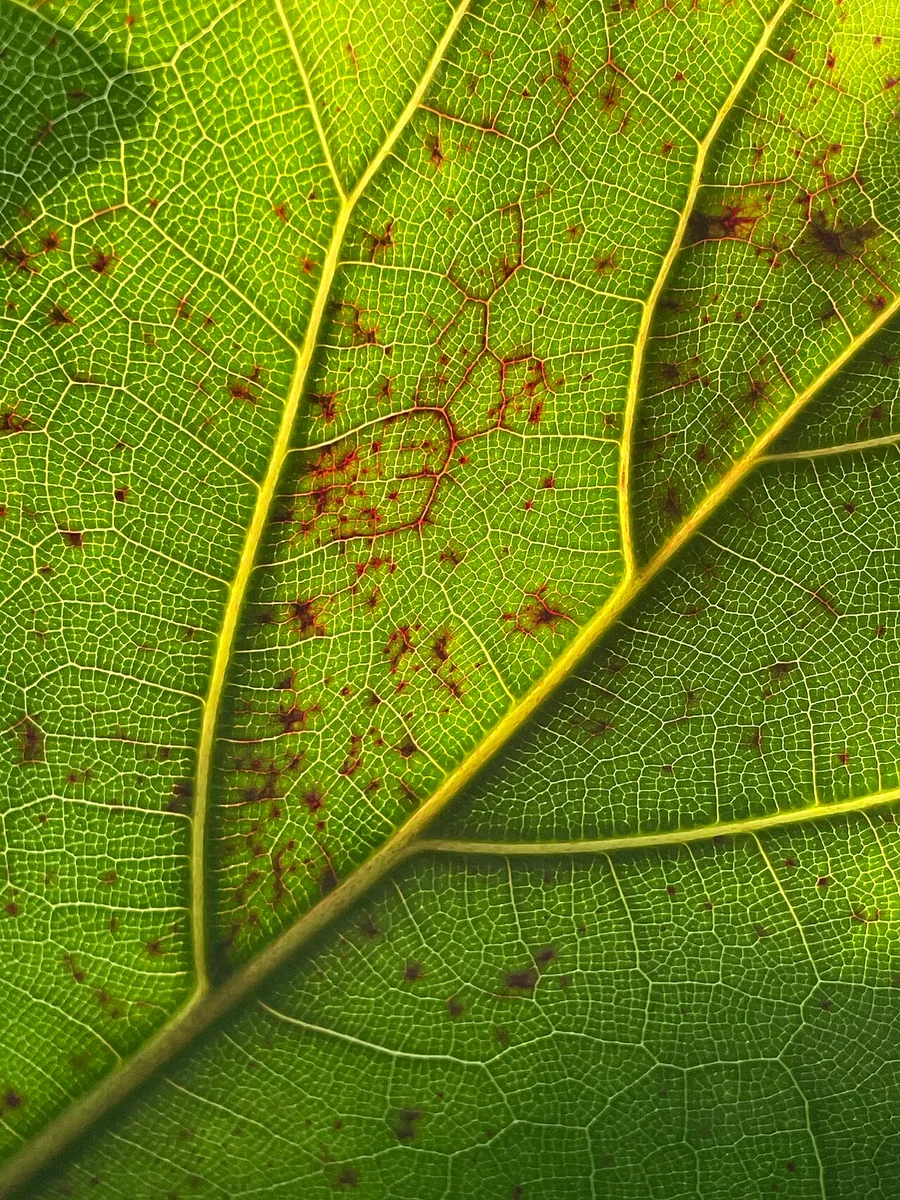
A fiddle leaf fig that drops a few old, lower leaves is usually just aging. Green leaves that fall within a few weeks of a move, especially to a dimmer spot, point to stress from the change. Spots are different. Dark patches that spread, look water-soaked or show up while the soil stays wet need a closer look at the roots and the leaf undersides.
Updated
Is it normal for a fiddle leaf fig to lose leaves?
Yes, if only a few old, lower leaves fall while new leaves keep coming at the top. The University of Florida IFAS Extension (UF/IFAS) lists “loss of lower leaves only” as a sign of age in Ficus, the group fiddle leaf figs belong to. Horticulturists at the University of Maryland Extension say older lower leaves normally shed as a plant matures. A steady loss of green leaves usually has a cause worth finding.
Why does a fiddle leaf fig drop leaves after a move?
A move usually changes the light, and a fiddle leaf fig reacts to that. UF/IFAS says Ficus “is sensitive to radical changes in light intensities.” Its problem table links green leaf drop to low light; the fix is a brighter spot. Clemson Cooperative Extension’s general houseplant guidance says leaf drop after a big change in surroundings “should only last about three weeks.”
Temperature matters too. UF/IFAS gives 65 to 80°F as the best range and says to avoid drafts. It links slimy dead spots and mass leaf drop to chilling. NC State Extension notes that brown spots can appear when heating or cooling vents swing the room temperature.
Then let it settle. UF/IFAS advises not moving, pruning, repotting or fertilizing a newly placed Ficus for about four weeks.
Which spots are normal for a fiddle leaf fig, and which are a problem?
Judge a spot by how it behaves. Spots that grow, merge or look wet need attention; small spots are still worth a check.
| What you notice | Likely cause | What to check | A useful next step |
|---|---|---|---|
| A few old, lower leaves yellow and fall; new leaves keep coming | Age, which is normal (UF/IFAS) | Whether new growth at the top looks healthy | Remove spent leaves; nothing to treat. |
| Green leaves drop within weeks of a move or a dimmer spot | Stress from the change | Light, drafts, vents, a cold trip home | Bright light, no harsh afternoon sun. Don’t repot or feed yet. |
| Small reddish or brown dots on leaf undersides that stay small | Can be moisture stress; worth a check | Fine webbing or tiny moving specks underneath; how evenly you water | Even out your watering. If you find mites, see the spider mite guide. |
| Spots that look water-soaked, grow or merge, sometimes with a yellow halo | Possibly bacterial leaf spot | Photos of the same leaves over a few days; nearby plants | Keep it apart, keep water off the leaves and remove badly affected leaves. |
| Dark brown or black patches while the soil stays wet; leaves dropping | Possibly root trouble | Roots: firm, or dark and soft | Stop watering, check drainage and read the signs of root rot. |
| Dry, pale or tan patches on the side facing a window | Possibly leaf scorch from direct sun | A recent move closer to the glass or into afternoon sun | Move it back or filter the light. |
| Brown spots near a vent, or slimy dark spots and heavy leaf drop after cold | Temperature stress | Distance from vents and drafts; recent cold | Move it out of the airflow and keep it above 60°F. |
Watch water-soaked spots closely. UF/IFAS documents a bacterial leaf spot on fiddle leaf fig with water-soaked lesions, and says the bacteria splash easily from plant to plant. Clemson says such spots grow and run together in wet conditions, so keep water off the foliage.
What should you do first?
Check the soil and the light first. NC State says fiddle leaf figs “are sensitive to overwatering and also need protection from the afternoon sun.” Feel the mix below the surface and make sure the pot drains. The guide to overwatering versus underwatering helps you tell which one you have.
Change one thing at a time, and hold off on feeding and repotting while it settles. Photograph the same leaves, undersides included, every few days to see whether spots are growing.
For a second opinion on the spots, Plant Doctor, an AI plant diagnosis app for iPhone, reads three photos and names the most likely cause along with the evidence behind it, so you can compare it with your own notes.
When is it time to get help?
Get an in-person opinion when spots keep spreading, the stem base feels soft, or several plants show the same spots. Take photos and a short history to a local nursery or extension service. A photo can’t confirm which bacterium or fungus is involved. The plant rescue checklist lists what to note.
Fiddle leaf fig questions
Why do the new leaves on my fiddle leaf fig have red spots?
More than one cause fits, so check before you act. UF/IFAS puts small red spots on the undersides, with yellow leaf drop, under moisture stress. Its fix is to adjust watering. Maryland Extension describes spider mite feeding as fine stippling, so look underneath for webbing. Clemson says bacterial spots can dry to reddish-brown speckles. If the dots grow, treat them as a possible leaf spot.
Should I repot a fiddle leaf fig that’s dropping leaves?
Not as a first fix. UF/IFAS advises no repotting for about four weeks after a Ficus is placed indoors. Repot for a clear reason, such as rotted roots. See whether to repot a struggling plant.
The ASPCA lists weeping fig (its entry says Ficus sp.) as toxic to dogs and cats. Its fig entry lists stomach and skin irritation among the signs. It has no fiddle-leaf fig entry; its “Fiddle-Leaf” entry is a philodendron. These notes are educational, not veterinary advice. If a pet has chewed the plant, call your vet or an animal poison control line. The pets and plants guide has more.
Sources and further reading
Care guidance checked against the sources below. Plant Doctor’s app examples are separate from these references; the institutions do not endorse the app.
- University of Florida IFAS Extension — Cultural guidelines for commercial production of interiorscape Ficus
- University of Florida IFAS Extension — Ornamental Ficus diseases: identification and control in commercial greenhouse operations
- Clemson Cooperative Extension — Houseplant diseases and disorders
- NC State Extension — Ficus lyrata
- University of Maryland Extension — Diagnose indoor plant problems
- Ask Extension (University of Maryland Extension) — Fiddle leaf fig
- ASPCA — Weeping fig
- ASPCA — Fig
- ASPCA — Fiddle-leaf (philodendron)
This guide offers general plant-care information. A photo cannot confirm every cause; a local nursery or extension service can help with severe or unclear cases.