
What’s making holes in your plant’s leaves?
Holes in a plant’s leaves aren’t always damage. A mature Monstera grows holes as its leaves get bigger. On other plants, look closely at the edges of each hole. Chewed edges with droppings or silvery trails mean a pest has been feeding. A hole with a brown or yellow rim may have started as a leaf spot.
Updated
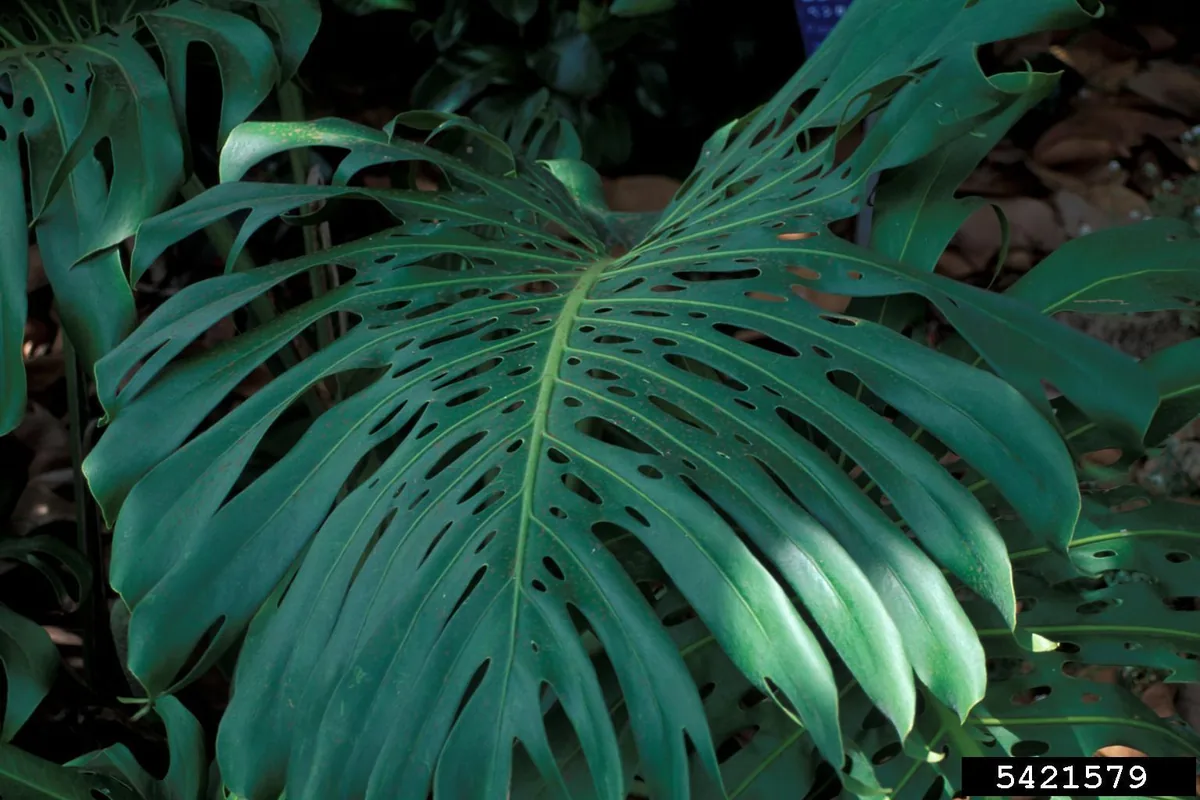
Are the holes supposed to be there?
On a Monstera, yes. Monstera leaves develop deep clefts and oblong holes as they grow, the University of Wisconsin–Madison Extension says, while young plants make small leaves “without lobes or holes.” A Monstera grown in poor light won’t develop the holes at all. If its leaves are also turning yellow, the guide to yellow Monstera leaves covers that separately.
What do the edges of the hole tell you?
Start with the edges. Then look at the leaf underside and the ground or saucer below.
| What you notice | What to check | A useful next step |
|---|---|---|
| Oblong holes and deep clefts in a mature Monstera leaf | Whether new leaves look healthy and the plant keeps growing. | Nothing to fix. This is how the leaf grows. |
| A split with no piece of leaf missing | Whether the two edges line up. Edges that line up mean a tear. | Nothing to treat. |
| Ragged holes or chewed edges, with small dark pellets on or under the leaves | Leaf undersides and the surface under the plant. Clemson Cooperative Extension says those droppings (frass) are a good sign of caterpillars. | Wearing gloves, pick off the caterpillars and any eggs. |
| Irregular holes with smooth edges, plus shiny, silvery trails | Leaves, pot rims and hiding spots nearby, after dark with a flashlight. | Slugs or snails. Wearing gloves, pick them off and remove their daytime hiding spots. |
| Many irregular holes or chewed edges, with no trails and no droppings | The plant at night, with a flashlight, for earwigs. | Trap them near the plant and empty the traps each morning. |
| Neat, round cuts taken from the edge of the leaf, never the middle | Whether the plant grows outdoors. Roses are a common target. | Leafcutter bees. Treatment is rarely needed. |
| A hole with a brown or yellow rim, or spots whose centers have dropped out | Other leaves for spots at different stages. | Read about brown spots that grow and pick off badly spotted leaves. |
| Tiny pale dots you can’t actually see through | Leaf undersides, with a magnifier, for tiny moving dots or webbing. | These aren’t holes. Read about spider mite stippling. |
Before you treat anything, photograph the edge of the hole and the leaf underside.
Plant Doctor, an AI plant diagnosis app for iPhone, takes three photos like these and names the most likely cause, with the evidence behind it.
What chews holes in garden plants?
Outdoors, common chewers include slugs and snails, earwigs and caterpillars. Slugs, snails and earwigs feed at night, so check after dark with a flashlight.
Slugs and snails leave “irregular holes with smooth edges,” says the University of California Statewide Integrated Pest Management Program (UC IPM), and their silvery slime trails confirm it was them. Look for them daily at first and pick them up in rubber or latex gloves, as UC IPM recommends. Clear the boards, stones, weeds and flowerpots where they hide during the day.
Earwig damage can look like caterpillar damage. Webbing, droppings or pupae point to caterpillars instead. To trap earwigs, set rolled newspaper or short pieces of hose near the plants at dusk. With daily trapping and fewer damp hiding spots, UC IPM says you shouldn’t need to spray.
Round notches cut from the edges of rose leaves point to leafcutter bees. Iowa State University Extension and Outreach describes the cuts as nearly perfectly round, taken from the edge and never from the middle. It calls the damage “a curiosity rather than a threat” and says controls are rarely justified.
Has your houseplant spent time outdoors?
Chewed leaves on a houseplant can trace back to a summer outdoors. The University of Maryland Extension says to check plants that have been outside for caterpillars, leaf-feeding beetles, weevils, grasshoppers, crickets, slugs and earwigs.
- Clemson Extension notes that butterflies and moths lay eggs on the undersides of leaves of plants that have been outdoors. A stray moth indoors can also lay eggs on a houseplant.
- Maryland Extension advises you to handpick pests and repot plants before you bring them back inside.
Should you cut off leaves with holes?
Not for holes alone. Holes in a mature Monstera leaf are normal growth, so they are no reason to cut it.
Spots are the exception. Maryland Extension says bacterial leaf spots can leave spots whose centers fall out, and that individual spotted leaves can be picked off and destroyed.
Holes in leaves questions
Why doesn’t my Monstera have holes?
The plant may be young, or the light may be too low. Wisconsin Extension says young Monstera plants make leaves without holes, and a plant in poor light won’t develop them. Give it brighter light and look at the next new leaves.
What is eating holes in my plant’s leaves at night?
Slugs, snails and earwigs feed at night, so UC IPM suggests looking after dark or early in the morning. Silvery trails mean slugs or snails. Dark droppings point to caterpillars.
What causes tiny holes in leaves?
First check that they’re really holes. UC IPM says spider mite damage first shows as a stippling of light dots on the leaves. Real holes with a yellow or brown rim may be spots whose centers fell out, which Maryland Extension describes in bacterial leaf spot.
The ASPCA lists monstera (Swiss cheese plant) as toxic to dogs and cats, with mouth irritation, drooling and vomiting among the signs. These notes are educational, not veterinary advice. If a pet has chewed the plant, call your vet or an animal poison control line. Both hotline numbers are on our page about which plants the ASPCA lists as toxic.
Sources and further reading
Care guidance checked against the sources below. Plant Doctor’s app examples are separate from these references; the institutions do not endorse the app.
- University of Wisconsin–Madison Extension — Swiss-cheese plant, Monstera deliciosa
- UC Statewide IPM Program — Pest Notes: Snails and Slugs
- UC Statewide IPM Program — Pest Notes: Earwigs
- UC Statewide IPM Program — Pest Notes: Spider Mites
- Clemson Cooperative Extension — Common houseplant insects and related pests
- University of Maryland Extension — Diagnose indoor plant problems
- University of Maryland Extension — Bacterial leaf spots on indoor plants
- Iowa State University Extension and Outreach — Leafcutter bees
- ASPCA Animal Poison Control — Swiss cheese plant
This guide offers general plant-care information. A photo cannot confirm every cause; a local nursery or extension service can help with severe or unclear cases.