
Why is your plant’s stem turning black and mushy?
A stem that turns soft and dark at the soil line is a warning sign of stem or crown rot, though cold damage and salt buildup can look similar. Act soon, because a canker can circle the stem and kill everything above it. Take cuttings from firm, healthy growth first, then check the roots before you decide what to do with the rest of the plant.
Updated
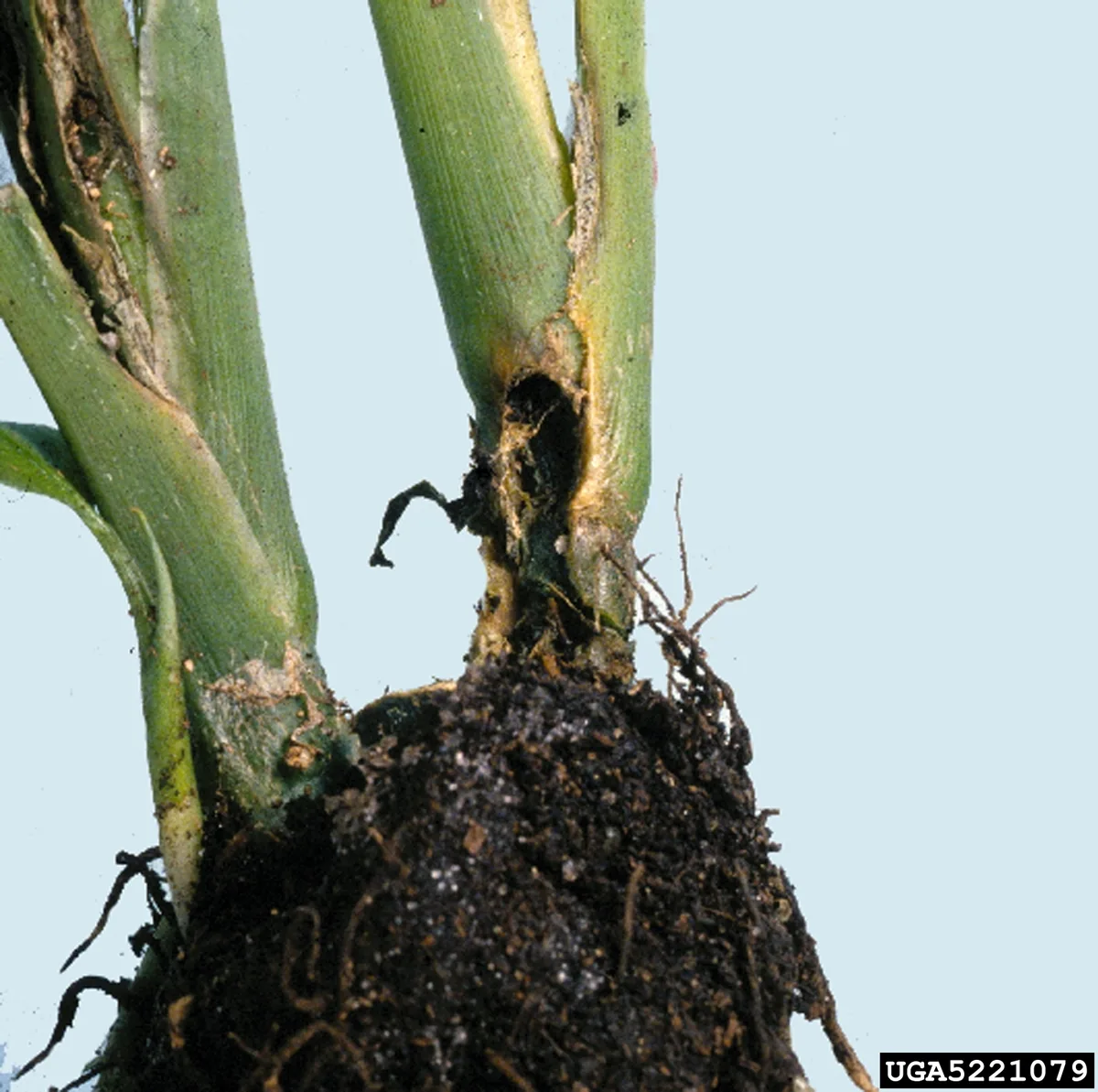
Is it stem rot, root rot or something else?
Press the stem gently and look at where the dark tissue starts. A soft stem at the soil line in wet mix is the classic picture of rot. A firm stem, or damage that followed a cold night, points elsewhere.
| What you notice | What to check | A useful next step |
|---|---|---|
| A soft, dark ring at or just above the soil line, and the plant wilts in wet mix | Whether the stem gives when pressed, how wet the mix is, water in the saucer. | Stop watering. Take cuttings from firm growth above, then check the roots. |
| A dark, sunken, soft patch higher up a stem, with firm tissue below | Whether the patch circles the stem. | Cut the stem off below the patch, into firm, clean tissue. |
| Blackened stems or leaves after a cold car ride, a cold window or a draft | Whether the plant sat below 50°F in the past week. | Move it away from the cold. Wait a week to see the full damage before you cut, unless the stem is soft at the soil line. |
| Collapse at the soil line with a white crust on the mix | Your feeding habits and whether you water from below. | Remove the crust and flush the mix with plain water. In a small pot, replace the mix. |
| A soft base on a snake plant or a succulent | The plant type, and whether the leaves are wrinkled or mushy. | Read about a soft snake plant or mushy succulents. |
The University of Maryland Extension says cold injury can blacken shoots and that the symptoms may keep appearing for up to a week after exposure. It advises protecting plants from temperatures below 50°F. Fertilizer salts can also form a white crust on the mix, especially with bottom watering. Maryland Extension says that crust can make the stem collapse at the soil line.
Plant Doctor, an AI plant diagnosis app for iPhone, can help tell rot from cold damage. It works from three photos, and the third photo can show the stem base. It returns the most likely cause with a step-by-step care plan.
How is stem rot different from root rot?
Root rot happens below the soil, and stem or crown rot shows at or above it. They can be the same problem seen in different places. Clemson Cooperative Extension lists the same group of soil fungi as causes of both root and stem rot. Stems may be girdled at or near soil level by “a ring of brown or black tissue,” Clemson says. Maryland Extension says one of these root rot organisms can also turn the lower stem black, brown or mushy.
So a soft stem base can mean the roots are affected too. The root rot guide covers how to check them.
How urgent is a soft stem?
Treat it as urgent. Maryland Extension describes stem cankers as dark, sunken areas that can circle the stem and kill the part above. It says there are no cures for cankers once they cause symptoms. For root rots, its advice is to cut out the rotten portions and replant the healthy sections.
A spray probably isn’t worth it. Clemson notes that products for indoor root and stem rots are available, but that for most indoor gardeners they probably cost more than a new plant. Keep the sick plant away from your others while you work, as Maryland Extension advises. For a valuable or large plant, a local nursery or extension service can look at it with you.
How do you take a rescue cutting?
Cut well above the soft, discolored tissue, into stem that is firm and a normal color. Maryland Extension’s rule is to take stem cuttings only from healthy tissue.
- Keep at least one node, the point where a leaf joins the stem. Clemson says pothos cuttings need one to root properly, and the University of Minnesota Extension says a Monstera cutting without a node won’t grow and will eventually rot.
- Use a clean blade and clean it between cuts. Washington State University Extension calls alcohol moderately safe and effective for tools, and says disinfectants should never go on the cut itself.
- Root the cuttings in sterile potting mix, as Maryland Extension advises.
What should you do with the rest of the plant?
That depends on the roots. Clemson says that if most roots are dark, soft and dead, it is better to discard the plant, and Maryland Extension advises throwing away severely infected plants. If only a few roots are affected, Clemson’s advice is to cut them out and repot in sterile soil.
The guide on whether to repot what’s left helps you choose a pot. Throw out the old mix, and scrub the pot clean before you use it again.
How do you keep stem rot from coming back?
Keep the stem base and the mix from staying wet. Clemson’s advice is to use sterilized soil and pots and not to overwater. Maryland Extension recommends these habits:
- Water early in the day so plant surfaces dry quickly.
- Space plants so air moves between them.
- Use clean or new pots and sterile potting mix, not garden soil.
- Inspect new plants before you put them with the others.
Soft stem questions
Can stem rot be reversed?
Not for tissue that has already rotted. Maryland Extension says there are no cures for cankers once they cause symptoms. Its advice for rot is to cut out the rotten portions, replant the healthy sections and root cuttings in sterile mix.
Is stem rot contagious?
It can spread. Clemson says these fungi survive in soil and plant debris and that their spores move by wind, splashing water or infested soil. Keep the plant apart, don’t reuse its mix, and clean your tools.
Why is my pothos stem turning black?
Run the same checks: press the stem, check the mix and look at the roots. If the base is rotting, take cuttings from firm vines. Clemson says each pothos cutting should have at least one node to root properly.
The ASPCA lists pothos, monstera and snake plant as toxic to dogs and cats, with vomiting among the signs for all three. These notes are educational, not veterinary advice. If a pet has chewed the plant, call your vet or an animal poison control line. Both hotline numbers are on our page about which plants the ASPCA lists as toxic.
Sources and further reading
Care guidance checked against the sources below. Plant Doctor’s app examples are separate from these references; the institutions do not endorse the app.
- Clemson Cooperative Extension — Houseplant diseases and disorders
- University of Maryland Extension — Root rots of indoor plants
- University of Maryland Extension — Stem cankers of indoor plants
- University of Maryland Extension — Diagnose indoor plant problems
- University of Maryland Extension — Fertilizer toxicity or high soluble salts in indoor plants
- Clemson Cooperative Extension — How to grow pothos indoors
- University of Minnesota Extension — Propagating Monstera deliciosa
- Washington State University Extension — The myth of Cloroxed clippers
- ASPCA Animal Poison Control — Golden pothos
- ASPCA Animal Poison Control — Swiss cheese plant
- ASPCA Animal Poison Control — Snake plant
This guide offers general plant-care information. A photo cannot confirm every cause; a local nursery or extension service can help with severe or unclear cases.