
Is your succulent thirsty or rotting?
Wrinkled, deflated leaves usually mean a succulent is thirsty, and soft, mushy leaves usually mean too much water. But a succulent with rotting roots can wilt too, even in damp soil. Before you water, check the soil and the stem base. Dry soil and a firm stem point to thirst. Wet soil or a soft, dark base points to rot.
Updated
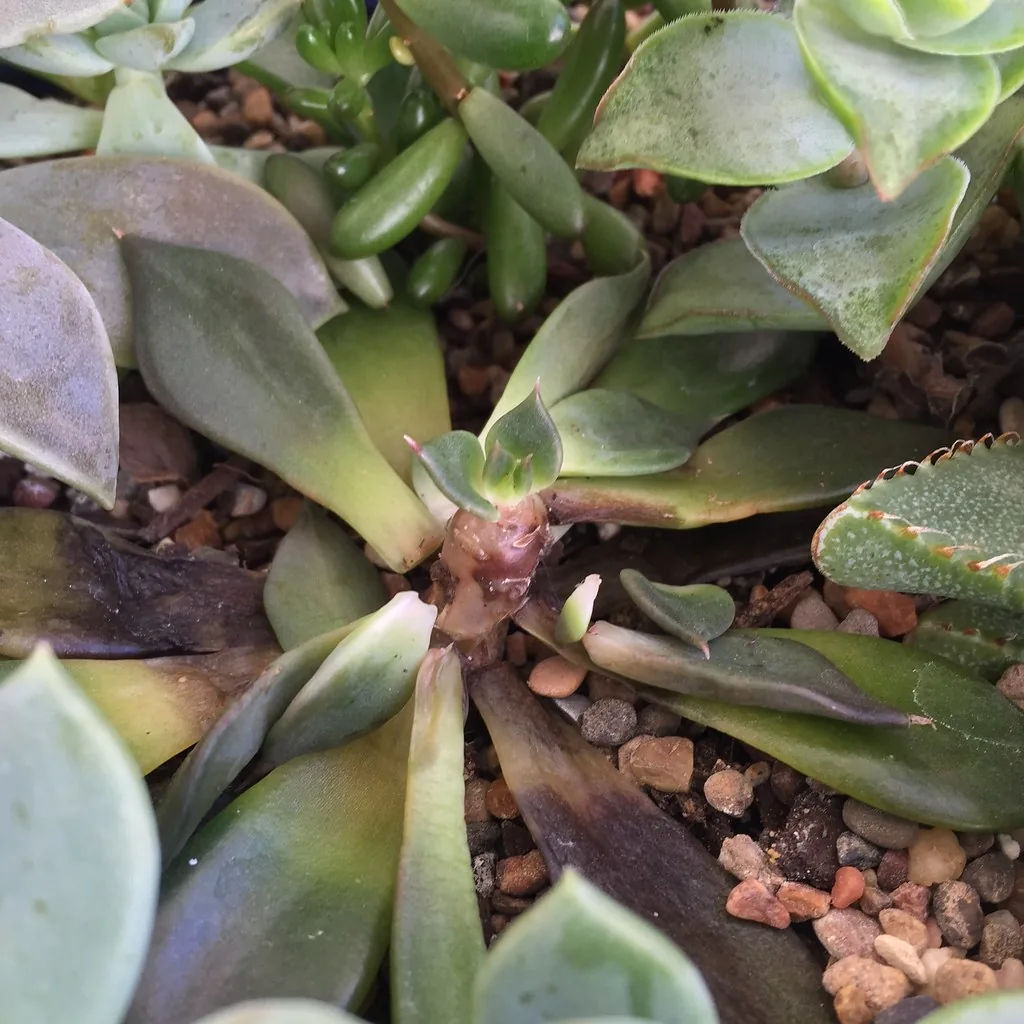
Thirsty or rotting: what tells them apart?
The soil and the stem base tell them apart, because the leaves alone can mislead. The Royal Horticultural Society (RHS) sums up both problems: too much water can lead to rot, “while too little water causes shrivelling.”
The trap is that rot can look like thirst. The University of Maryland Extension says plants with root rot often wilt “even when adequate moisture is present” in the mix. So a wrinkled succulent sitting in damp soil may not need water at all.
What is normal for a succulent?
Succulents store water in their thick leaves, so the leaves change as the plant uses that store. The RHS describes cacti and succulents by their fleshy leaves or stems, “in which they store water.” The University of Minnesota Extension calls these leaves water storage organs. The RHS also notes that succulents typically grow much slower than many other plants.
Losing a few bottom leaves is normal too. NC State Extension says that on an echeveria, the leaves wither and drop from the bottom of the stem, and over time the stem becomes visible. The checks here suit leafy succulents such as echeveria, jade, burro’s tail and haworthia, and help with cacti too.
Which signs match your succulent?
Match the leaves to the soil and the stem base.
| What you notice | What to check | A useful next step |
|---|---|---|
| Wrinkled, deflated leaves; firm stem | Whether the soil is dry all the way down and the pot feels light. | Most likely thirst. Water until it runs from the drain holes, then discard the excess. |
| Wrinkled or limp leaves, but the soil is still damp | The stem base. Is it soft or dark? | Don’t water. Check the roots. |
| Soft or mushy leaves | Wet mix, and a soft, black or brown stem base. | Stop watering. Ease the plant out and check the roots and stem. |
| Only the lowest leaves dry and papery, top firm and plump | Whether new growth at the center looks healthy. | Normal shedding. Remove the dead leaves. |
| A tall, stretched stem with gaps between leaves | Distance from the window and hours of light. | The RHS says most succulents “aren’t happy in poor light away from windows.” See why plants grow tall and thin. |
How do you check the roots and stem base?
Ease the plant out of its pot and look. Maryland Extension says rotted roots look brown to black and feel soft, and their outer layer comes away from the core easily. Root rot can also turn the lower stem black, brown or mushy. If the roots are firm and the base is solid, go back to the soil check.
If the stem base is soft, the guide to a soft or dark stem and the root rot guide cover the next steps. For a valuable plant, or one you can’t judge, ask a local nursery or extension service.
With mixed signs, three photos in Plant Doctor, an AI plant diagnosis app for iPhone, get you the most likely cause and the evidence behind it.
How do you stop rot from coming back?
Give water a way out, and let the soil dry between waterings. Minnesota Extension says to use pots with drainage holes, because water trapped in the soil will cause rotting and decay “in a very short time.”
Then follow Minnesota Extension’s routine:
- Water thoroughly so it flows through the drain holes, and discard the excess after a few minutes.
- Let the soil dry out completely between waterings.
- In the low light of winter, water only enough to prevent shrinking and withering.
Keep plants off cold windowsills, too. The RHS says cold raises the chance of rot. If the plant sits in a decorative pot with no hole, lift it out to water it and let it drain.
You don’t need a gravel layer. Iowa State University Extension and Outreach says a gravel layer “does not make up for the lack of a drainage hole.” The research on gravel, and when a new pot helps, is in whether to repot a struggling plant.
Succulent questions
Why are the bottom leaves of my succulent dying?
A few dry bottom leaves under a firm, plump top are normal. NC State Extension says rosette leaves wither and drop from the bottom and can be a source of disease if they aren’t removed. Soft, dark tissue spreading up from the base isn’t normal, so check the stem and roots.
Can you save a mushy succulent?
Sometimes. NC State Extension says an echeveria can restart from its crown, cut with a short stem, or from a single leaf left on the soil. Maryland Extension says to take cuttings only from healthy tissue and to throw away a badly infected plant.
Should I water a wrinkled succulent right away?
Only if the soil is dry all the way down. If it’s still damp, check the stem base first, because rot can make a plant look thirsty in moist mix.
The ASPCA lists jade plant and aloe as toxic to dogs, cats and horses, and kalanchoe as toxic to dogs and cats. The ASPCA names vomiting among the signs for all three (for aloe, it says not in horses). It lists burro’s tail and hens and chickens (Echeveria elegans) as non-toxic. Check your plant by name on the ASPCA list. These notes are educational, not veterinary advice. If a pet has chewed the plant, call your vet or an animal poison control line. For the hotline numbers and other plants, see which plants the ASPCA lists as toxic.
Sources and further reading
Care guidance checked against the sources below. Plant Doctor’s app examples are separate from these references; the institutions do not endorse the app.
- Royal Horticultural Society — Cacti and succulents
- University of Minnesota Extension — Cacti and succulents
- NC State Extension Gardener Plant Toolbox — Echeveria
- University of Maryland Extension — Root rots of indoor plants
- Iowa State University Extension and Outreach — How to care for houseplants
- ASPCA Animal Poison Control — Toxic and non-toxic plants list
This guide offers general plant-care information. A photo cannot confirm every cause; a local nursery or extension service can help with severe or unclear cases.