
Why is your ZZ plant turning yellow?
A ZZ plant stores water in thick underground rhizomes, so it rarely yellows from thirst. One old stem fading while new growth looks fine is usually normal aging. Several stems yellowing while the mix stays damp points to wet roots, so check the rhizomes before you water again. Slow growth is normal for a ZZ plant and isn’t a sign of trouble on its own.
Updated
What is normal for a ZZ plant?
A ZZ plant grows slowly, and some marks that look like trouble are normal. Iowa State University Extension and Outreach says the ZZ plant “grows rather slowly” and tends to grow in spurts.
Clemson Cooperative Extension says black spots on the stems are normal. It also notes that new leaves on the cultivar ‘Chameleon’ emerge yellow and mature to a dark green. The University of Maryland Extension explains that on a ZZ plant, the leaflets tend to fall off before the old stalk slowly shrivels. If it’s the oldest stem, that’s “not concerning.”
Why is wet soil the usual suspect for a ZZ plant?
A ZZ plant holds its own water supply, so too much water is a more likely problem than too little. Clemson says the plant’s bulbous rhizomes store water. For a drought-tolerant plant like this, Maryland Extension says, under-watering is “much less likely.”
The University of Connecticut Home and Garden Education Center (UConn) says overwatering is “just about the only factor” that kills this tough houseplant, and that its signs are yellow leaves and rotting rhizomes. Not every yellow leaf means overwatering, though, and the other causes of yellow leaves apply to a ZZ plant too.
Which yellowing pattern does your ZZ plant have?
The pattern tells you more than the color.
| What you notice | What to check | A useful next step |
|---|---|---|
| One older stem yellowing, its leaflets dropping first | Whether it’s the oldest stem and the rest is firm and green. | Most likely normal aging. Maryland Extension says the old stalk slowly shrivels on its own. |
| Several stems yellowing at once, mix still damp days after watering | Moisture an inch down, water trapped in a saucer or outer pot, and soft stem bases. | Stop watering and empty trapped water. If the bases feel soft, check the rhizomes. |
| Leaves yellowing then browning, stems bending away from a sunny window | Hours of direct sun. | Move it to a more indirectly lit spot, as UConn advises. |
| Bright yellow new leaves that darken as they mature | The plant label. Is it ‘Chameleon’? | Normal for that cultivar. No action needed. |
| No new stems for months, plant otherwise firm and green | Light level and season. | Normal slow growth. Don’t add water or fertilizer to push it. |
Maryland Extension notes that plants in too little light shed older leaves faster than normal. Check how much light a houseplant needs.
How do you check the rhizomes?
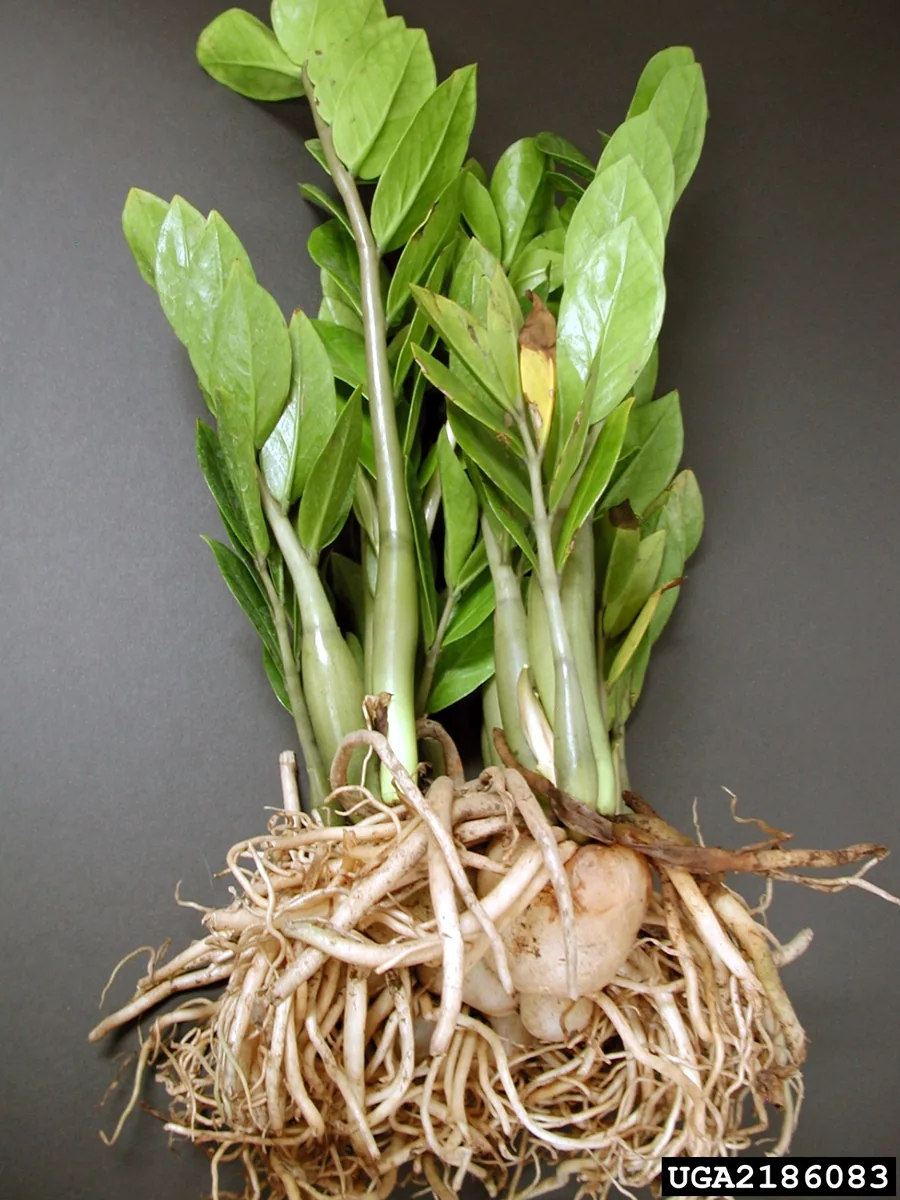
Ease the plant out of its pot and feel the rhizomes, the thick, potato-like parts at the base of the stems. Rotted roots turn brown to black and go soft, and their outer skin slips off the core easily, according to Maryland Extension. Check both the color and the feel. Soft or mushy rhizomes point to rot, one of the overwatering signs UConn names. If the rhizomes feel soft, follow the root rot guide. If they’re firm, put the plant back and let the mix dry before you water again.
For a badly rotted plant, Maryland Extension’s advice is to discard it and root cuttings only from healthy tissue. For a valuable plant, ask a local nursery or extension service.
For a second opinion on aging versus wet roots, take three photos with Plant Doctor, an AI plant diagnosis app for iPhone, and it names the most likely cause and the evidence behind it.
What should you avoid while you work it out?
Hold off on water and fertilizer until you know the cause. Change one thing at a time.
- Don’t water on a calendar. Maryland Extension suggests feeling the mix at least an inch deep and watering only once it’s fairly dry there. See how to tell when a plant needs water.
- Don’t feed it to fix the yellowing. Clemson says ZZ plants should be fertilized only once or twice during the growing season.
- Keep it out of direct sun. Iowa State warns that direct afternoon sun may damage the leaves.
- Skip the cold winter window. Clemson says to keep ZZ plants above 60°F.
A new pot isn’t always the answer either. Read when repotting a struggling plant helps first.
ZZ plant questions
Should I cut off yellow ZZ stems?
It isn’t required. Maryland Extension says an old stalk slowly shrivels on its own. Cutting off a yellow stem won’t fix wet roots, so check the mix and the rhizomes first.
Can a ZZ plant recover from overwatering?
Sometimes, though Maryland Extension suggests discarding a severely infected plant. Cuttings from healthy tissue are another route, but UConn says a leaf cutting may take up to 9 months indoors to start forming a rhizome.
Why is my ZZ plant not growing?
Iowa State says a ZZ plant grows slowly and in spurts. UConn adds that it’s slower still in the low light of many homes. Clemson says bright, indirect light helps speed it up.
NC State Extension says ZZ plant has “a medium toxicity to cats and dogs,” with diarrhea and vomiting among the signs if leaves are eaten in quantity. All parts of the plant are toxic if eaten, according to University of Florida IFAS Gardening Solutions. The ASPCA list has no ZZ plant entry, and the ASPCA says its list is “not meant to be all-inclusive.” These notes are educational, not veterinary advice. If a pet has chewed the plant, call your vet or an animal poison control line. For the hotline numbers and other plants, see which plants the ASPCA lists as toxic.
Sources and further reading
Care guidance checked against the sources below. Plant Doctor’s app examples are separate from these references; the institutions do not endorse the app.
- Clemson Cooperative Extension — ZZ plant (Zamioculcas zamiifolia): indoor care, growing tips and plant guide
- University of Connecticut Home and Garden Education Center — ZZ plant
- Iowa State University Extension and Outreach — The ZZ plant
- University of Maryland Extension (Ask Extension) — ZZ plant
- University of Maryland Extension — Root rots of indoor plants
- NC State Extension Gardener Plant Toolbox — Zamioculcas zamiifolia
- UF/IFAS Gardening Solutions — ZZ plant
- ASPCA Animal Poison Control — Toxic and non-toxic plants list
This guide offers general plant-care information. A photo cannot confirm every cause; a local nursery or extension service can help with severe or unclear cases.