
Yellow Monstera leaves: start with which leaf changed.
A single older yellow leaf on a growing Monstera is different from several leaves yellowing in wet soil. Check the pattern, root-ball moisture and recent light changes before changing care. Normal splits and holes in mature Monstera leaves are not themselves a disease symptom.
Updated
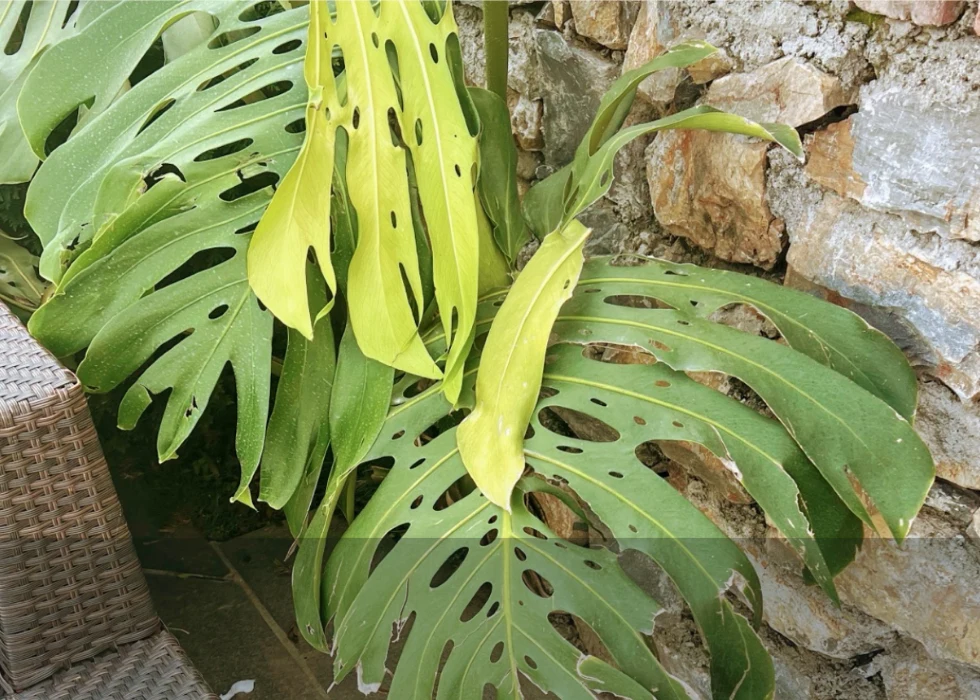
Three questions for this plant
- Is it one older leaf or a spreading change? Note whether new growth looks healthy and whether more leaves change over the next few days.
- Is the root ball staying wet? A large pot or trapped water in an outer container can keep the roots wet even if the top looks dry.
- Did the light change? Consider a recent move into strong direct sun or a much darker corner.
Wisconsin Extension’s Monstera guide describes its indoor light and watering needs. A steady location with appropriate light makes it easier to judge whether a care change is helping.
Choose the next check from the evidence.
Yellowing with wet soil
Check drainage first. If the plant also wilts or its stem base is soft, use the root-rot guide to decide what needs inspecting.
Yellowing with dry, crisp edges
Check the moisture through the root ball. Compare the clues in too much versus too little water before adding water.
Take a photo that tells the story.
Include the whole Monstera so the position of the affected leaf is clear. Then photograph the leaf and the pot or stem base. A tight crop of yellow tissue alone leaves out information that helps separate the possibilities.
Monstera questions
Are the splits in a Monstera leaf damage?
Mature Monstera deliciosa leaves naturally develop splits and holes. New tears, expanding brown tissue or visible pests deserve a different check; do not treat the plant just because a leaf is split.
Should I feed a Monstera with yellow leaves?
Do not assume a yellow leaf means a nutrient shortage. Check moisture, drainage and recent changes first. Fertilizer does not repair a saturated root ball or damaged roots.
Monstera is not a pet-safe plant to chew. See the ASPCA plant database. Pet-safety information is educational; contact a vet if a pet has eaten it.
Sources and further reading
Care guidance checked against the sources below. Plant Doctor’s app examples are separate from these references; the institutions do not endorse the app.
- University of Wisconsin–Madison Extension — Monstera deliciosa
- Royal Horticultural Society — leaf damage on houseplants
- ASPCA — toxic and non-toxic plants
This guide offers general plant-care information. A photo cannot confirm every cause; a local nursery or extension service can help with severe or unclear cases.