
Why does your calathea have crispy edges or curling leaves?
Calathea leaves that fold up in the evening and open again by morning are doing something normal. Crispy brown edges, or leaves that stay curled during the day, are stress signs. Check for dry air and dry soil first. Fluoride in tap water and too much fertilizer can also brown the edges of calathea leaves.
Updated
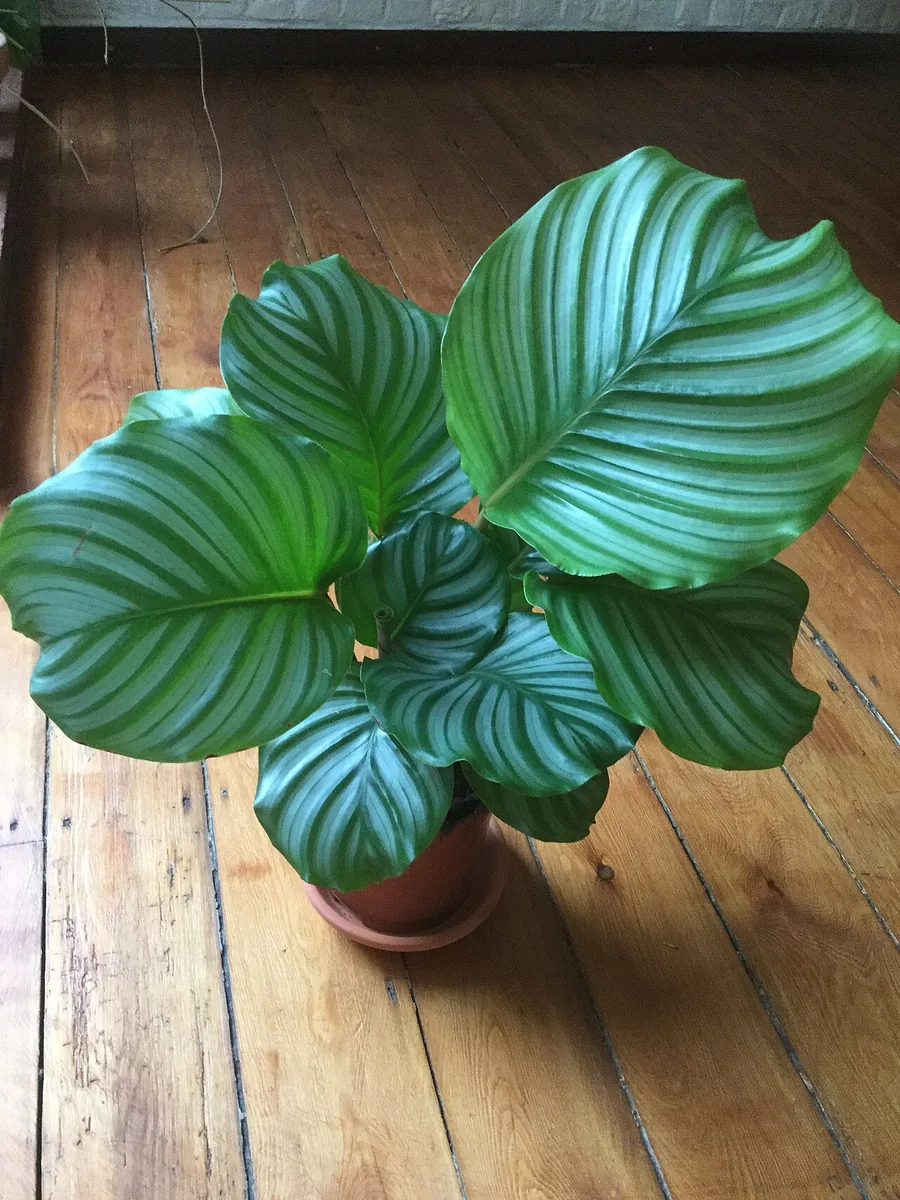
Is it normal for calathea leaves to move and curl?
Yes. Calatheas belong to the prayer plant family, and their leaves fold up each evening. NC State Extension says these plants “exhibit nyctinastic movement,” which means the leaves fold in response to darkness. Its page on the peacock plant says the leaves fold in the evening and reopen at sunrise, driven by changes in light and temperature.
So check your calathea at midday. Leaves that stay rolled or curled in daylight are the ones to worry about. A brand-new leaf that unfurls from a tight roll is normal too. NC State notes that in the related prayer plant, Maranta, new leaves appear as a rolled tube.
Many species have moved from Calathea to Goeppertia, NC State says, so you may see either name on a label or care page.
What causes crispy edges and daytime curling?
Dry air and dry soil are common causes. NC State links brown edges to low humidity, and curling to underwatering or low humidity. The Royal Horticultural Society (RHS) says leaves of some plants, Maranta for example, curl inward in bright light and dry air. Fluoride, fertilizer and direct sun can brown the leaves too.
| What you notice | Likely cause | What to check | A useful next step |
|---|---|---|---|
| Leaves fold up in the evening and open by morning | Normal night folding | Nothing | No change needed. |
| Leaves stay rolled or curled inward during the day; mix dry | Thirst | Moisture below the surface | Keep the mix moist but not soggy, letting the surface dry slightly between waterings. |
| Crispy brown edges and tips on several leaves; dry room air | Dry air | A heat source blowing hot, dry air at the plant | Move it away from the vent and raise the humidity. |
| Brown edges or dead spots near the margins, though humidity and watering look right | Possible fluoride damage | Whether you water with tap water | Switch to rainwater or distilled water. |
| Burned tips or edges after feeding; a white crust on the mix | Too much fertilizer or salts | How often you feed | Flush the mix with plain water and feed less. |
| Pale or scorched patches on leaves that get sun | Direct sun | Light at that spot | Move it out of direct sun. |
| Drooping with soft stems in wet mix, or after cold | Rot or chilling | Roots; drafts and temperatures below 55°F | Check the signs of root rot and keep it out of drafts. |
The University of Florida IFAS Extension (UF/IFAS) lists excess fertilizer among the causes of dead leaf tips and margins. Clemson Cooperative Extension adds hot, dry air and salt buildup to the list, and suggests drenching the mix now and then to wash salts out.
Crispy edges have several causes that look alike, so change one thing at a time and judge the result on new leaves. To narrow the list, Plant Doctor, an AI plant diagnosis app for iPhone, uses three photos of the plant to point to the most likely cause, with the evidence behind it. The guide to brown leaf tips covers the same problem on other plants.
Does tap water really cause brown edges on a calathea?
It can, if your tap water contains fluoride. NC State’s zebra plant page says tap water “contains fluoride which can cause the edges and tips of the leaves to brown,” and recommends distilled water or rainwater. UF/IFAS lists fluoride toxicity as a cause of dead spots near leaf margins and advises avoiding water and fertilizer that contain fluoride.
Chlorine comes up less. The calathea pages cited here don’t mention it, though Clemson’s general houseplant page says some houseplants are sensitive to fluoride or chlorine in tap water.
How do you raise humidity without wetting the leaves?
Use a humidifier or a tray of wet pebbles, both of which NC State suggests. A naturally humid room, such as a bathroom or kitchen, works too. Texas A&M AgriLife Extension says grouping plants close together raises humidity.
Skip the misting. NC State says wetting the foliage can cause leaf spot, and Texas A&M doesn’t generally recommend misting because it can spread disease. The RHS lists misting as an option but calls a tray of damp gravel better. For humidity, UF/IFAS says calatheas keep their looks best between 40% and 60%, while NC State’s species pages ask for 60% or more. Other plants curl for other reasons; see why leaves curl.
Calathea questions
Why do calathea leaves curl at night?
It’s normal. NC State calls it nyctinastic movement: the leaves fold in the evening and reopen around sunrise as light and temperature change.
What is a calathea’s scientific name now?
Many former Calathea species are now Goeppertia. NC State gives Goeppertia orbifolia, formerly Calathea orbifolia, as one example. Pet lists such as the ASPCA’s still use Calathea.
The ASPCA lists calathea (Calathea spp.) and the rattlesnake plant (Calathea insignis) as non-toxic to dogs and cats. The ASPCA also says any plant material may cause vomiting and stomach upset. These notes are educational, not veterinary advice. If a pet has chewed the plant, call your vet or an animal poison control line. The pets and plants guide has more.
Sources and further reading
Care guidance checked against the sources below. Plant Doctor’s app examples are separate from these references; the institutions do not endorse the app.
- NC State Extension — Goeppertia
- NC State Extension — Goeppertia zebrina
- NC State Extension — Goeppertia orbifolia
- NC State Extension — Goeppertia makoyana
- NC State Extension — Maranta leuconeura
- University of Florida IFAS Extension — Cultural guidelines for commercial production of interiorscape Calathea
- Clemson Cooperative Extension — Houseplant diseases and disorders
- Royal Horticultural Society — Leaf damage on houseplants
- Texas A&M AgriLife Extension — Light, temperature and humidity
- ASPCA — Calathea
- ASPCA — Prayer plant
This guide offers general plant-care information. A photo cannot confirm every cause; a local nursery or extension service can help with severe or unclear cases.