
Why is your peace lily drooping?
A peace lily usually droops because its potting mix has dried out. Water it thoroughly, and a thirsty plant stands back up within hours. A sag late on a hot, bright afternoon can be normal if the mix is moist. But if it droops while the mix stays wet, or doesn’t recover after watering, check the roots before you add more water.
Updated
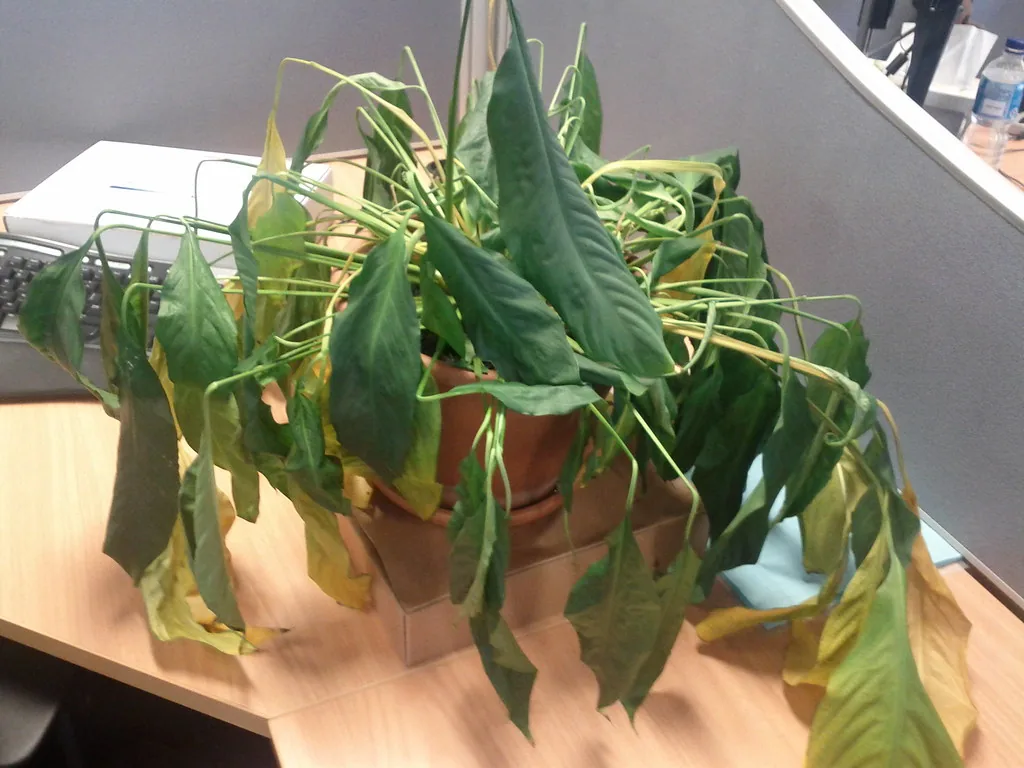
Why does a peace lily droop so dramatically?
A peace lily has no woody trunk to hold it up. The University of Florida IFAS Extension (UF/IFAS) describes it as “an herbaceous evergreen with short, erect to creeping stems bearing tufts of foliage.” Clemson Cooperative Extension notes that the leaves “rise directly from the soil.” The Royal Horticultural Society (RHS) explains that a plant wilts when its leaves lose water faster than the roots can take it up.
So when a peace lily runs dry, the whole plant can fold at once, sometimes all the way to soil level. UF/IFAS calls underwatering the most common problem and says growers call the collapse a “crash.”
Is it thirst, rot or just a hot afternoon?
Feel the mix first. Dry mix points to thirst, and wet mix with a plant that stays limp points to the roots. UF/IFAS says a peace lily may droop late in the day in bright light above 80 to 85°F “even though potting mix is moist. This is normal.”
| What you notice | Likely cause | What to check | A useful next step |
|---|---|---|---|
| The whole plant collapses; the pot feels light | Thirst, the most common cause | Mix dry at your fingertip, pushed in to the first joint | Water until it drains, then empty the saucer. |
| Sags late in the day in bright light or heat; mix still moist | Normal late-day droop | Light and heat at that spot | No water needed. If it happens often, move it out of direct sun. |
| Droops while the mix is wet, or stays limp after watering | Saturated mix or root rot | Water trapped in a saucer or outer pot; sparse roots with black tips | Don’t water. Tip out trapped water and check the roots. |
| Wilts soon after each watering; roots circle on top or poke out of the holes | Pot-bound | Roots at the drainage holes | Repot into a container one to two inches larger. |
| Damaged leaves beside a heating or air-conditioning vent, or after a cold spell | Temperature stress | Vents, drafts and temperatures below 60°F | Move it out of blowing air and cold spots. |
| Brown tips and edges after several collapses | Damage from repeated drooping | How often it has crashed | Water before it collapses next time. |
What should you do if the mix is dry?
Water it thoroughly. Push a finger in to the first joint. If it’s dry at your fingertip, the plant needs water, Clemson says. Apply water until it runs out of the bottom of the pot, then empty the saucer.
If very dry mix sheds water, Clemson suggests double watering: water once and again half an hour later, or soak the pot in a sink, then drain it. UF/IFAS says a crashed peace lily “will resurrect in a matter of hours,” though some leaves may yellow or brown afterward.
What if it droops in wet mix?
Don’t water it. Any injury to the roots, including rot from too much water, cuts how much water the plant can take up. Clemson warns that “watering may make the problem worse.” Tip out any water trapped in a saucer or outer pot, since Clemson warns that standing water leads to root rot.
UF/IFAS links wilting with sparse, black-tipped roots to saturated mix, and says it’s more likely in cold weather, when the plant needs less water. Check the roots with the root rot guide.
Thirst and rot can look the same from above. Snap three photos with Plant Doctor, an AI plant diagnosis app for iPhone, for the most likely cause and a step-by-step care plan to follow.
Should you wait for a peace lily to droop before you water?
No. The droop works as an alarm, not a schedule. UF/IFAS says “frequent drooping will result in brown tips and edges,” and Clemson says that when the mix dries out too much, the leaves and edges turn yellow. Check the mix with your finger every few days instead. The guide on how to tell when a plant needs water covers the finger test and the weight of the pot.
Peace lily questions
Why is my peace lily drooping but the soil is moist?
Two causes fit. A sag late on a hot, bright day is normal. A plant that stays limp in wet mix may have root rot. See other causes of drooping.
Why is my peace lily drooping after repotting?
Check the new pot’s size and drainage. Clemson recommends a pot just one to two inches larger and warns that too large a pot can keep the mix too wet, leading to root rot. The guide on whether to repot a struggling plant has more.
The ASPCA lists peace lily as toxic to dogs and cats, with mouth irritation, drooling, vomiting and difficulty swallowing among the signs. Clemson notes peace lily isn’t a true lily (Lilium). The ASPCA lists kidney failure in cats for true lilies and daylilies. These notes are educational, not veterinary advice. If a pet has chewed the plant, call your vet or an animal poison control line. The pets and plants guide has more.
Sources and further reading
Care guidance checked against the sources below. Plant Doctor’s app examples are separate from these references; the institutions do not endorse the app.
- University of Florida IFAS Extension — Cultural guidelines for commercial production of interiorscape Spathiphyllum
- Clemson Cooperative Extension — Peace lily
- Clemson Cooperative Extension — Indoor plants: watering
- Clemson Cooperative Extension — Indoor plants: transplanting and repotting
- Royal Horticultural Society — Leaf damage on houseplants
- ASPCA — Peace lily
- ASPCA — Lily
- ASPCA — Day lilies
This guide offers general plant-care information. A photo cannot confirm every cause; a local nursery or extension service can help with severe or unclear cases.