
Why are your orchid’s leaves limp and wrinkled?
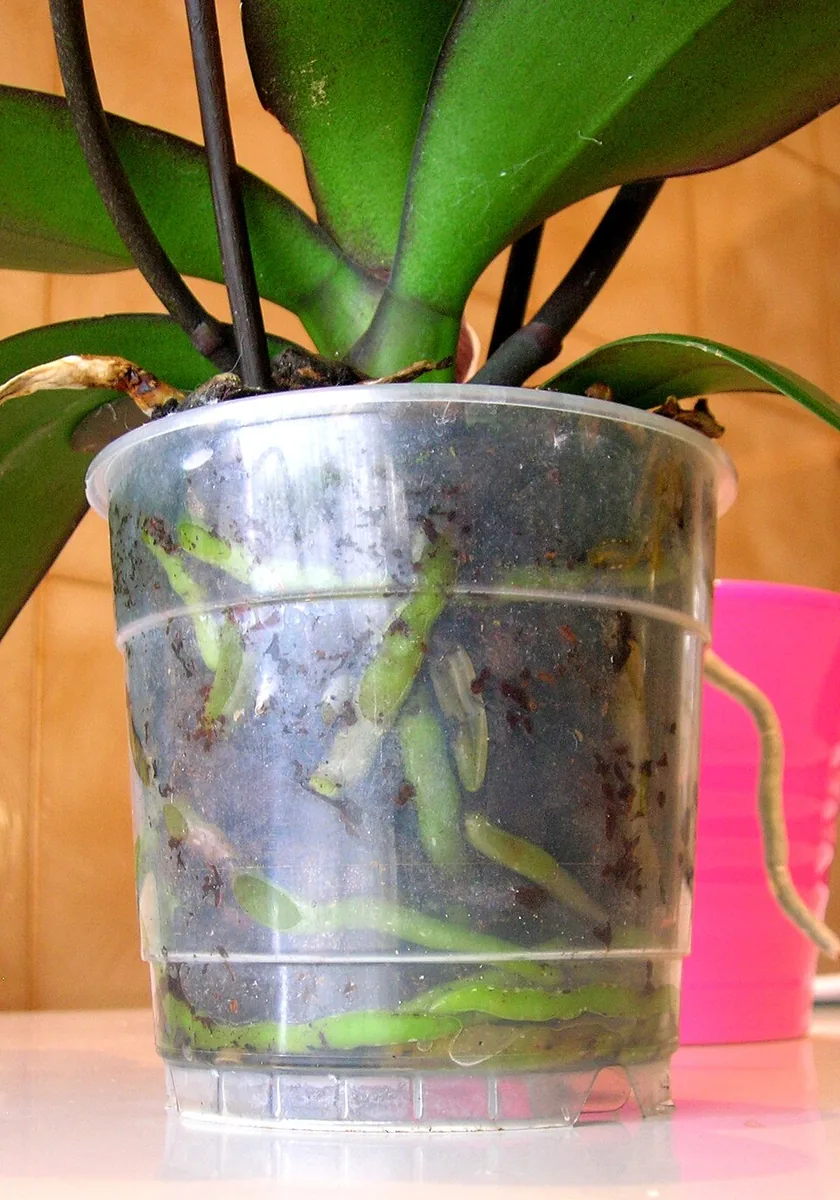
Limp, wrinkled leaves on a moth orchid (Phalaenopsis) mean the leaves are short of water. That happens when the plant is too dry, and also when rotted roots can’t take up water from wet bark. The leaves look the same either way, so check the roots. Firm, plump roots suggest thirst, while mushy or hollow roots suggest rot.
Updated
What do limp, wrinkled leaves mean on a moth orchid?
Limp, wrinkled leaves mean water isn’t reaching the leaf tissue. The American Orchid Society (AOS) says shriveled leaves “indicate a lack of water to plant tissue.” The hard part is the cause. Orchid leaves wrinkle and go floppy whether the plant was overwatered or underwatered, the AOS says, because in either case the roots have been damaged and can’t take in enough water.
The University of Maryland Extension notes that Phalaenopsis has no water-storing pseudobulbs, as many orchids do, and that low humidity and too little water both lead to wrinkled leaves. The advice here is for moth orchids. Orchids with pseudobulbs store water in a different way, and other houseplants have their own causes of drooping and wilting.
What do healthy orchid roots look like?
Healthy moth orchid roots are plump and firm to the touch, the AOS says. Maryland Extension adds that roots sprawling out of the pot are “perfectly normal,” so don’t cut them off. Those aerial roots turn from a dull silver or white to a pale green when they’ve had enough water.
Unhealthy roots look and feel different. The AOS says black, mushy roots point to overwatering, and roots that are dry and falling apart point to underwatering. Kaylee South and Michelle Jones of Ohio State University add that dying roots turn brown or tan. A root can also go hollow. The AOS says the real root is a thin core, about as thick as fishing line, inside a spongy coating called velamen. When that coating sits in water, it begins to break down and decay. Maryland Extension adds that the outer part of a rotted root pulls away easily from the core, leaving a fine thread.
Firm or mushy: which roots does your orchid have?
Ease the plant out of its pot. The AOS says that’s the only way to confirm the damage.
| What you notice | What to check | A useful next step |
|---|---|---|
| Plump, firm, silvery-white roots; dry bark; a light pot | How long since a thorough watering, and whether the plant only gets small amounts. | Most likely thirst. Drench it in the sink, let it drain fully, and watch the roots turn green. |
| Brown or black, mushy roots; bark wet or broken down like mulch | How many firm roots remain, and how old the bark is. | Don’t add water. Trim the dead roots and repot into fresh bark. |
| Flat or hollow roots whose outer layer slides off a thin core | Whether any roots are still plump. | Treat these as dead roots. Count what’s left before you decide. |
| Few roots after a recent repot | The repotting date. | Raise the humidity near the plant and wait for new roots, as the AOS suggests. |
Why can an orchid be thirsty in wet bark?
An orchid can only drink through working roots. “If the plant has no roots, it cannot take up any water, no matter how much you give it,” the AOS says. It names overwatering, broken-down potting mix and a recent repot as causes of that root loss.
Old bark makes it worse. Maryland Extension says bark that has broken down to look like mulch drains poorly and holds too much moisture. The pot matters too. The AOS says never to water an orchid while it sits in a decorative container with no drain hole, because water collects and rots the roots. Empty any water left in an outer pot.
What should you do next?
Act on what the roots showed, and change one thing at a time.
- If the roots are firm and dry, water thoroughly with tepid water, which the AOS recommends. Maryland Extension suggests running water over the plant, bark and aerial roots in 3 or 4 drenches over about 10 minutes, then letting it drain completely.
- If the roots are rotted, clean out the dead roots and repot into new media in a new or disinfected pot, as the AOS advises. Maryland Extension says to cut off any dead, discolored or damaged roots. The root rot guide covers what to do if most roots are mushy.
- After losing many roots, the AOS says you’ll have to water more often until new roots grow.
Skip misting as the fix. Maryland Extension says misting usually doesn’t provide enough moisture indoors. Don’t add water to bark that’s already wet. If you aren’t sure whether repotting will help, read when repotting a struggling plant helps. For a valuable plant, or one with almost no firm roots, ask an orchid society, a local nursery or an extension service.
When the roots don’t settle it, Plant Doctor, an AI plant diagnosis app for iPhone, can look at three photos and suggest the most likely cause, along with a step-by-step care plan.
Orchid leaf questions
Do wrinkled orchid leaves recover?
No, not the old ones. The AOS says wrinkled leaves “will not become ‘unwrinkled,’ but new leaves should look normal.” Judge recovery by new roots and new leaves.
Do ice cubes cause limp, wrinkled leaves?
One study found no harm to the flowers, but the AOS still advises against ice. In that 2017 HortScience study, researchers at Ohio State University and the University of Georgia split 48 orchids at each site between three ice cubes a week and the same volume of room-temperature water for 4 to 6 months. Flower and display life were the same, and the bark cooled to about 52°F (11°C) at its lowest. It tested bark only, and it compared ice with the same small amount of water, not a thorough soak. The AOS prefers tepid water, saying the cold stresses the plant and salts build up because nothing flushes the mix. If leaves wrinkle on an ice routine, check the roots first.
What should I do if my orchid’s roots are mushy?
Trim the dead roots, keep the firm ones and repot into fresh bark. Then water more often until new roots grow, as the AOS says.
The ASPCA lists the moth orchid as non-toxic to dogs, cats and horses. The ASPCA also says eating any plant material may cause vomiting and stomach upset in dogs and cats. These notes are educational, not veterinary advice. If a pet has chewed the plant, call your vet or an animal poison control line. The hotline numbers are in which plants the ASPCA lists as toxic.
Sources and further reading
Care guidance checked against the sources below. Plant Doctor’s app examples are separate from these references; the institutions do not endorse the app.
- American Orchid Society — Why are my orchid’s leaves wrinkled and leathery?
- American Orchid Society — Lesson 4: water requirements
- University of Maryland Extension — Care of Phalaenopsis orchids (moth orchids)
- University of Maryland Extension — Root rots of indoor plants
- HortScience (South and others, 2017) — Ice cube irrigation of potted Phalaenopsis orchids in bark media does not decrease display life
- The Ohio State University — Watering Phalaenopsis orchids with ice cubes
- ASPCA Animal Poison Control — Toxic and non-toxic plants list
This guide offers general plant-care information. A photo cannot confirm every cause; a local nursery or extension service can help with severe or unclear cases.