
How do you get rid of fungus gnats?
Fungus gnats breed in damp potting mix, and it’s the larvae in the top layer, not the flying adults, that you need to stop. Find the pot they come from, let the top of the mix dry between waterings, and use yellow sticky traps to see whether numbers fall. If they don’t, a Bti product labeled for fungus gnats on houseplants indoors targets the larvae.
Updated
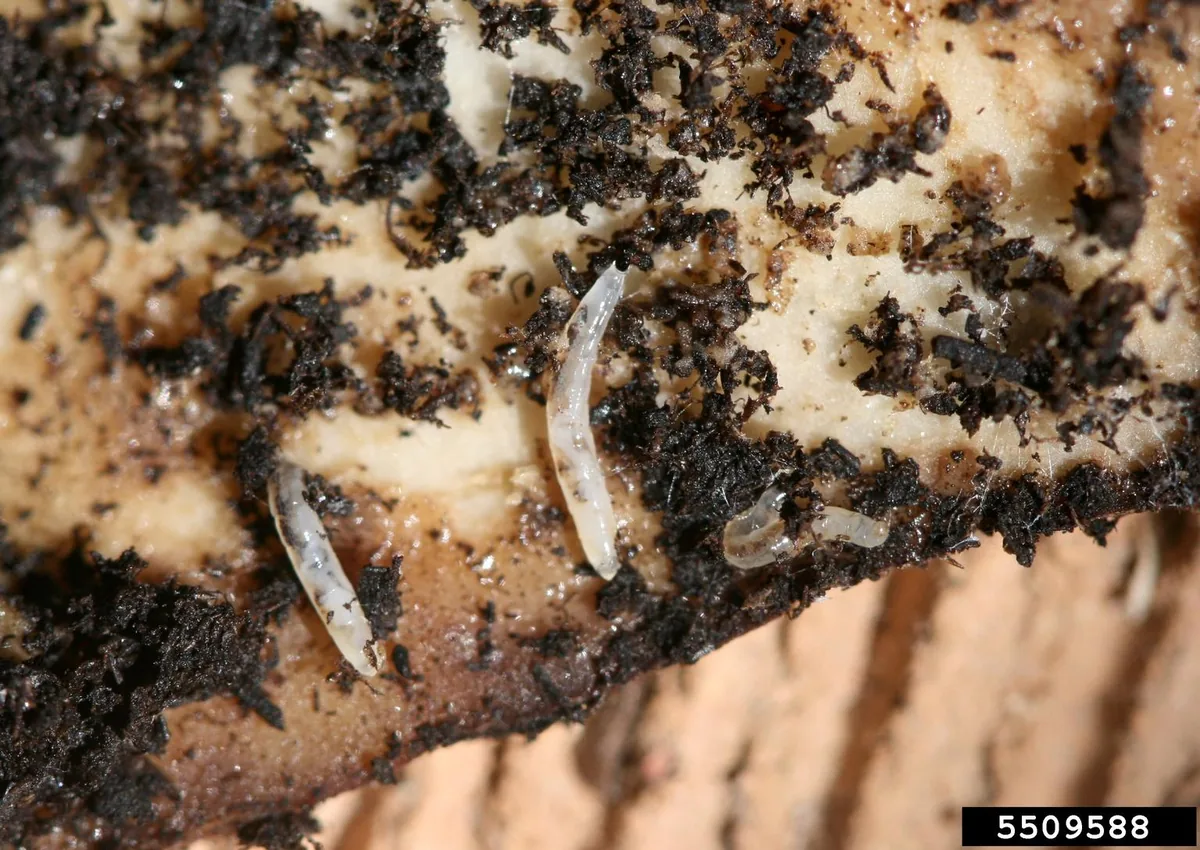
Are these fungus gnats or something else?
Fungus gnats are small, dark, delicate flies that stay close to the pots. The University of California Statewide Integrated Pest Management Program (UC IPM) describes them as weak fliers that usually don’t move around much indoors. The larvae are the stage that matters. They have a shiny black head and a whitish-to-clear, legless body, and they live in the top of the mix.
| What you notice | What to check | A useful next step |
|---|---|---|
| Small dark flies on the soil or on leaves near one pot | Watch the soil surface while you water. Fungus gnats move when the water hits them. | Start with that pot. |
| Flies at a window, lamp or sink, not clearly on a plant | Cover the suspect pot or the drain with cheesecloth for several days and look for flies. | If the drain is the source, clean the drain. Never mix cleaning products. |
| Clear larvae with black heads in the top of the mix | Set a slice of raw potato on the mix and check under it now and then. | Larvae confirmed: let the top layer dry before any product. |
| Tiny pale insects that jump when you water | These are likely springtails, not gnats. | Let the surface dry. The University of Minnesota Extension says springtails rarely if ever damage indoor plants. |
| The plant wilts while the mix is wet | The roots. Are they soft, dark or smelly? | Wet roots are a more common cause of wilting than gnats. Read the root rot signs first. |
Where are the gnats coming from?
Fungus gnats come from moist, organic potting mix, and sometimes from a drain. Colorado State University Extension says the larvae usually live in the top 2 to 3 inches of the mix. Mixes high in peat moss attract egg-laying females. So does old mix that has broken down and holds too much water.
To find the pot, watch the soil surface closely when you water. Iowa State University Extension says that’s usually enough to spot the pot. Gnats at a sink may not come from a plant. The University of Maryland Extension notes that they can breed in drains with a buildup of moist debris.
For new mix, Minnesota Extension advises against potting soil from open bags that have sat outside.
Why do fungus gnats show up in fall and winter?
Plants use less water when days are short and cool. If your watering routine stays the same, the mix stays moist longer, and that suits the larvae. Colorado State says fungus gnats are most noticeable in late fall and winter.
How do you stop the larvae?
Let the top 1 to 2 inches of mix dry out between waterings. Colorado State recommends this, and Maryland Extension explains why: “When the soil dries, the larvae will die.” Dry the top layer, not the whole root ball. The Royal Horticultural Society (RHS) adds one limit: drying helps only if it doesn’t harm the plant. Minnesota Extension’s version is to let the surface dry “without letting the plants wilt.” In a small pot, or with a plant that likes to stay moist, dry only the surface.
- Check the mix below the surface before you water. This guide shows how to tell when a plant needs water.
- Empty saucers and decorative outer pots after you water.
- Don’t move infested pots next to your other plants. UC IPM warns that flies can emerge in the new spot and infest other pots.
- Repot into fresh houseplant mix when the old mix has broken down and stays wet. The RHS notes that throwing out old compost removes eggs and larvae.
Change one thing at a time. If the wet mix points to a bigger watering problem, the overwatering versus underwatering comparison helps you sort it out.
Do sticky traps get rid of fungus gnats?
No. Yellow sticky traps catch adults, but Minnesota Extension says traps “only help to detect adults and should not be relied on as the only management method.” The best controls target the larvae instead.
That still makes a trap useful. Stick a small card near the soil and count the catch every few days. If the count keeps falling while the mix dries, the change is working. The RHS notes that traps catch other insects, including predators, so take them down once the gnats are gone.
When is a soil treatment worth it?
A soil treatment is worth it when gnats hang on after you’ve changed how you water. The option these extension sources name most often is Bti, which Maryland Extension describes as the active ingredient in soil drenches labeled for indoor plants to control fungus gnat larvae. Choose one labeled for houseplants indoors. Bti works only on larvae, and UC IPM says it doesn’t persist indoors, so repeated applications may be needed. Follow the product label for how and how often. The Bt sold for caterpillars is a different subspecies, so check that the label names fungus gnats.
The US EPA’s rule is short: “the label is the law.” UC IPM lists mail-order beneficial nematodes. They are live and perishable, so apply them right away and follow the supplier’s directions.
UC IPM says general insecticides are “rarely warranted” for these flies in and around homes. Iowa State doesn’t recommend them for houseplant gnats. Sprays aimed at adults miss the larvae in the mix, Colorado State notes. Before you use any product, read the checks to make before you spray.
If the gnats are only part of the story, Plant Doctor, an AI plant diagnosis app for iPhone, works from three photos. It returns the most likely cause, the evidence behind it and a step-by-step care plan.
Fungus gnat questions
Do fungus gnats harm plants?
Adult fungus gnats don’t. UC IPM says large numbers of larvae can damage roots and stunt growth, mostly in seedlings and young plants. For most indoor plants, Maryland Extension calls them annoying but harmless. If a plant wilts while the mix is wet, check the roots for rot first.
Are they fungus gnats or fruit flies?
Look at where they stay. Fungus gnats are dark, delicate and keep close to the pots. Minnesota Extension warns that they can be confused with fruit flies and other small flies. Confirm with the watering check, or set a slice of raw potato on the mix and look for larvae under it.
Does hydrogen peroxide kill fungus gnats?
The evidence is thin. A few sources suggest a hydrogen peroxide drench, but none of the fungus gnat fact sheets listed under Sources mention it. A Bti product labeled for houseplants indoors has much more extension support. Whatever you use, follow the product label.
Sources and further reading
Care guidance checked against the sources below. Plant Doctor’s app examples are separate from these references; the institutions do not endorse the app.
- UC Statewide IPM Program — Pest Notes: Fungus Gnats
- University of Minnesota Extension — Managing insects on indoor plants
- University of Maryland Extension — Fungus gnats
- Colorado State University Extension — Fungus gnats as houseplant and indoor pests
- Iowa State University Extension and Outreach — Fungus gnats in houseplants
- Royal Horticultural Society — Fungus gnats
- US Environmental Protection Agency — Introduction to pesticide labels
This guide offers general plant-care information. A photo cannot confirm every cause; a local nursery or extension service can help with severe or unclear cases.